|
Keeping you informed about community-led research - for a more inclusive and equitable Aotearoa.
|
|
|
|
|
|
Nau mai haere mai
Whakatairangatia i te mana o te rangahau ā-hāpori me te mahi tahi
Upholding the mana of community knowledge - together |
|
|
|
Kia ora e te whānau, Last week we had the privilege of celebrating the recipients of the Te Auaha Pito Mata Awards for Emerging Researchers. Congratulations again to our incredible award recipients Ria Te Uira Holmes, Joseph Tutonga Houghton, Taylor Le Cui, Corrina Thompson, Atelaite Taupeavai Mapa and Paula Ormsby.
We were honoured to be hosted by Her Excellency The Right Honourable Dame Cindy Kiro at Government House in Wellington, where award recipients, whānau, supporters, and sector leaders came together to recognise the power of community-led knowledge. In her opening remarks, Dame Cindy captured the kaupapa of Community Research perfectly: "Like you, I know that knowledge doesn't just exist in institutions. It lives also within our communities, through our connections with each other, and within the collective wisdom of ages. I appreciate your focus on amplifying voices that are too often left unheard." The research recognised through Te Auaha Pito Mata reflects this commitment to listening deeply to communities and ensuring that their knowledge informs the decisions that affect their lives. It reminds us that some of the most valuable insights emerge from lived experience, collective wisdom, and community action. Dame Cindy also reflected on why this work matters so much today: "In these uncertain times, when we are facing so many stresses and challenges, there is even greater need to understand the lived experiences of New Zealanders, and the pressures on the natural world that sustains us." These words resonate strongly with us. Whether responding to social inequities, environmental challenges, or the ongoing need to uphold Te Tiriti o Waitangi, community-led research helps us better understand the issues we face and identify pathways forward together. In this month's newsletter, we celebrate the achievements of our award recipients and share research, resources, and updates from across the sector that continue to strengthen communities and uplift diverse voices throughout Aotearoa.
Ngā manaakitanga,
Lorna |
|
|
|
Congratulations to our Te Auaha Pito Mata Award Winners ! |
|
|
|
Ngā mihi maioha Dr Catherine Leonard, Dr Kathie Irwin, Dr Gauri Nandedkar, Assoc Prof Polly Yeung, Dr Janet Tupou, Dr Edmond Feheko, Sandar Duckworth, Mathea Roorda, Garth Nowland-Foreman, Dr Brendan Stevenson and Professor Eleanor Holroyd - our amazing Guest Judges.
Ngā mihi nui to:
- Faculty of Health and Environmental Sciences, Auckland University of Technology
- Garth Nowland-Foreman
- Kōtātā Insights
who partnered with us for this celebration of emerging community researchers. |
|
|
|
| | BIG SHOUT OUT to our amazing and inspiring volunteer kaitiaki!
June marks National Volunteer Week in Aotearoa and the return of the Big Shout Out campaign by Volunteering New Zealand, making it the perfect time to recognize the dedication, expertise, and time our kaitiaki contribute to Community Research. If you have volunteers supporting your own organisation or community space, we encourage you to celebrate them and their impact this month.
You can find practical ideas, toolkits, and ways to get involved by checking out the Volunteering New Zealand resources at The Big Shout Out. |
|
|
|
| |
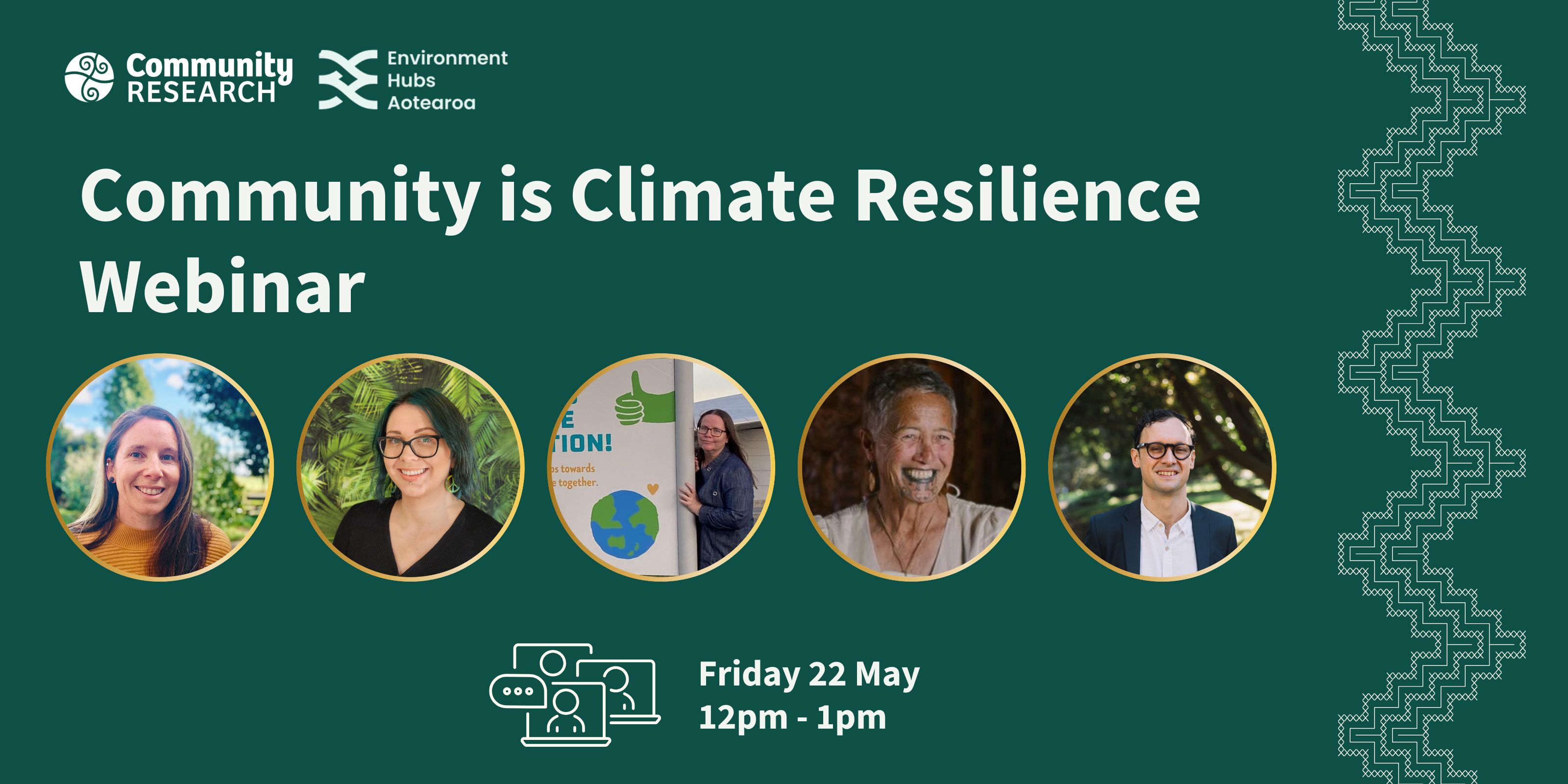
Community is Climate Resilience is a timely webinar exploring how communities responded to the North Island severe weather events of early 2023, and what these experiences can teach us as extreme weather becomes more frequent and more disruptive.
Drawing on the Community is Climate Resilience report published by Environment Hubs Aotearoa in early 2026, this session brings together those who lived the response and those who helped document it.
The webinar explores what worked, what didn’t, and where gaps in official responses were felt most strongly. Rather than focusing solely on systems and institutions, this kōrero highlights the strength, adaptability, and local knowledge that communities bring to crisis response.
Watch the webinar recording here. |
|
|
|
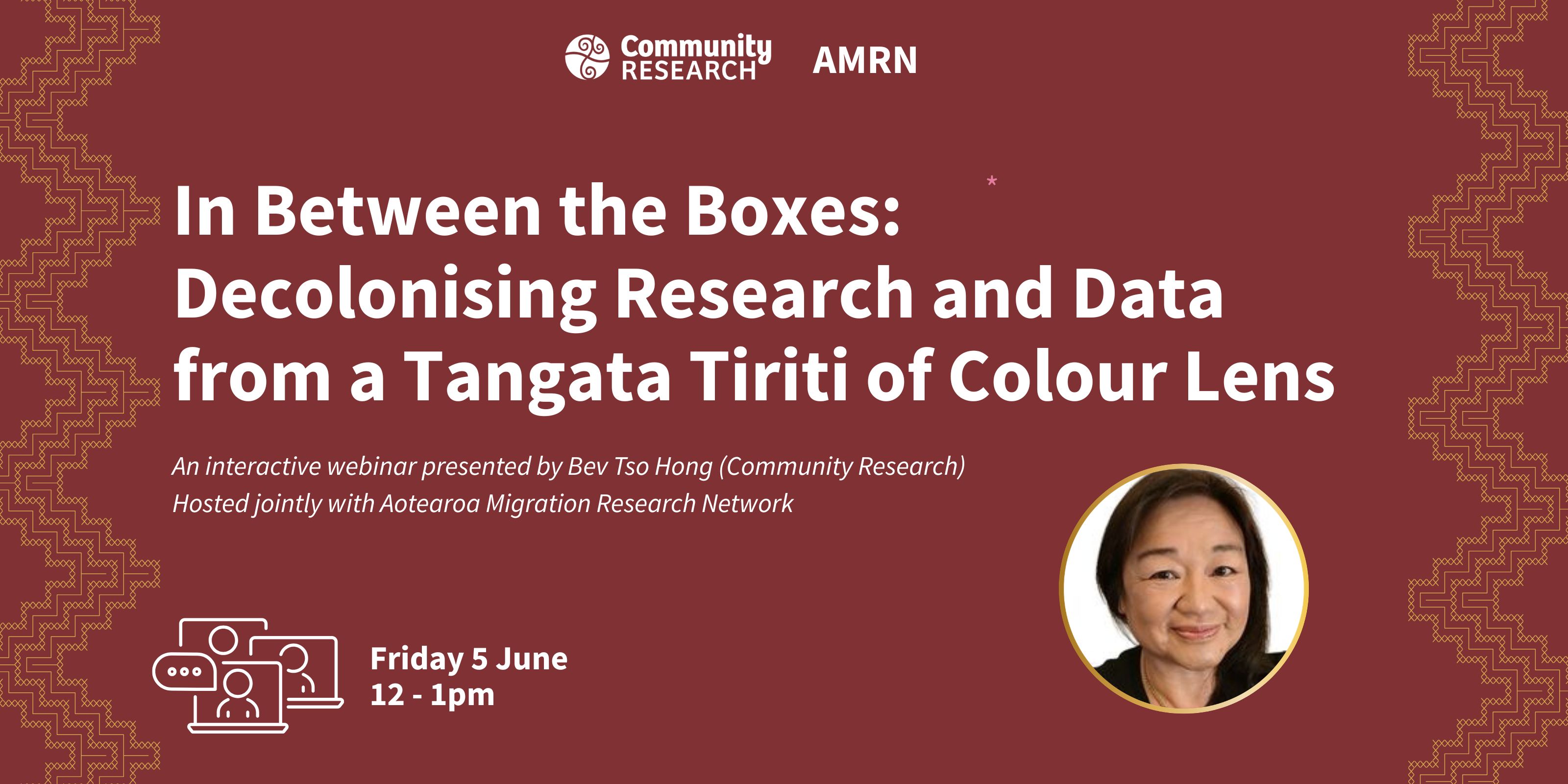
| | In Between the Boxes: Decolonising Research and Data from a Tangata Tiriti of Colour Lens
Friday 19th June (this is the rescheduled date)
12 - 1pm Presenter: Bev Tso Hong (Community Research, Aotearoa) Jointly hosted by Aotearoa Migration Research Network (AMRN) and Community Research, Aotearoa.
This webinar takes an “in‑between” or third‑space lens to research decolonisation, grounded in the lived experience of a fourth‑generation Chinese New Zealander, Tangata Tiriti of colour, and social policy researcher. Reflecting across research and community engagement I have undertaken over two decades, we will examine how migrant and intergenerational realities collide with the way our systems define, measure, and respond to people’s lives. This includes how research and evaluation with ethnically diverse, migrant, and former refugee communities can make people both hyper‑visible and invisible in data at the same time – grouped together under broad pan‑ethnic labels or erased through small‑number suppression.
Using my experience in community and policy settings as a starting point, we will explore recurring patterns to consider what a third‑space approach to research and data might look like for ethnic, migrant, and former refugee communities in Aotearoa: noticing where standard boxes and timeframes fail intergenerational realities, designing from relationships and obligations, and treating community knowledge and lived experience as the starting point.
|
|
|
|
New Community Research Online Harm Special collection collaboration
Community Research have begun working with Tāhono Trust and other collaborators to develop a special collection that focuses on understanding, preventing, and addressing online harm in Aotearoa New Zealand (the Collection).
This mahi connects with the Coalition for Better Digital Policy formed by Tāhono Trust whose vision is to: see the robust, inclusive, and effective use and regulation of online platforms in Aotearoa, with a focus on upholding human rights and preserving the benefits technology can provide us.
The project aims to launch a Collection by October 2026 that:
1. presents a clear structure for thinking about online harm and potential solutions and clarifies common terminology used both locally and internationally.
2. considers
- intersectionality (different harms affecting different demographic groups)
- existing and emerging research (e.g., Ministry for Women report on harms targeting women)
- a solutions-focus rather than just identifying the problems.
3. includes quality assurance processes to ensure that disinformation and biased research messages are not inadvertently perpetuated
4. initially focuses on priority topics within the context of 2026 central government elections:
a. misinformation, disinformation and the impact on participatory democracy (of particular relevance in an election year)
b. online harm and leadership
c. prevention and response - disproportionately targeted communities.
A collective effort is required for this initiative to be successful. We will be reaching out via Ngā Kete in the coming months to engage more broadly with interested researchers and allies for feedback, support, and contributions for setting up the Collection. In the meanwhile, please feel free to contact us at content@communityresearch.org.nz if you would like to know more |
|
|
|
The Gender Definitions Bill - Submission Resources
You may be aware of an upcoming bill trying to dictate the definitions of a “woman” and a “man.” The Legislation (Definitions of Woman and Man) Amendment Bill indicates these can easily be attributed as either “adult human biological female”/”male.” Unfortunately, this approach is not evidence led for many reasons. The Bill doesn’t identify an adequate need in society for this legislative change, proposes vague legal definitions that erase communities with inherent variations of sex characteristics, and risks causing harm rather than ‘protecting’ women. It also isn’t Tiriti-led. Māori cosmologies tell us that ira is not fixed, so the Gender Definitions Bill imposes upon the rights of irawhiti (trans) irahuhua (gender diverse) and ira tangata (intersex) whānau.
If you’re looking to find out further information on the bill: - InsideOut and Pride Pledge are holding a submissions webinar on key issues and how to submit. (Midday Weds 10th)
- Professor Mohan Dutta has produced a written article on the implications he sees
Here are a few related pieces of community-led, open-access research. In 2025, NZLC also put out a relevant report on Human Rights Act protections for intersex, transgender and non-binary people in Aotearoa. It’s important to display solidarity and send a message even if you’re not part of the LGBTTQIA+ community. This ActionStation petition consolidates the voices of cisgender women who stand against the bill: E Tū E Kī: They Don’t Speak for Us - Block the Definition of Woman Bill | OurActionStation.
Make a submission of your own here.
At Community Research, we’re also developing a visual resource relating to this topic, and will be putting together a submission which echoes the community-led research in this space. If you know or have any research relating to the area, let Moana know - research@communityresearch.org.nz. If you would like to add any thoughts or collaborate on our submission please feel free to get in touch.
|
|
|
|
The Disability Support Services Bill is being presented by the Government as legislation intended to create a formal legislative framework for Disability Support Services (DSS) in New Zealand. According to the Government, the Bill is part of ongoing work to “strengthen and stabilise” the disability support system following recent operational and funding pressures.
The Bill proposes to establish a statutory basis for Disability Support Services, including:
- who may be eligible for supports
- the principles and purposes of the system
- assessment and decision-making processes
- the role of “natural supports” such as family and whānau
- powers relating to funding, allocation, and administration of supports
- oversight and operational functions within the disability support system
A significant feature of the Bill is that many detailed operational settings are not included directly in the legislation itself. Instead, many important aspects appear intended to be addressed later through secondary legislation, regulations, operational policy, criteria, and administrative processes.
Read more from the guide here
|
|
|
|
Kōrero for Change webinar in the current series: Political and Democratic Processes.
With the 2026 New Zealand General Election fast approaching, this timely kōrero will highlight the systemic barriers that continue to exclude disabled people and their whānau from equitable access to politics and democracy in Aotearoa New Zealand; from enrolling and voting, to accessing political information and engaging in public decision-making. Access should be grounded in equity, dignity, and empowerment. However, for many disabled people, it is still shaped by limited awareness, inflexible systems, and ableist assumptions about who can and should participate in our political and democratic processes. Despite growing awareness and reform efforts, these barriers remain deeply embedded.
Event Details📅 Date: Wednesday, 17 June 2026 ⏰ Time: 9:00 AM – 11:00 AM NZST 🌐 Platform: Zoom 📩 Register now to secure your place and receive webinar access details directly to your inbox! |
|
|
|
Closing Date ExtensionWe encourage you to responded to this important survey. Lets help them get the 750 responses needed! |
|
|
|
| | CALL FOR INTERNSHIP PROJECT PROPOSALS FROM SUPERVISING NPM RESEARCHERS
The Ngā Pae o te Māramatanga Māori (NPM) Futures Programme supports promising Māori students interested in pursuing a career in research to work under the mentorship of a senior Māori researcher.
The New Horizons Summer Internships award assists Māori students enrolled at a NPM tertiary education partner entity to work under the supervision and guidance of a NPM Māori researcher based at any NPM partner entity, in order to gain research experience and increase their research skills. Interns will participate in the online NPM Māori Futures programme during the tenure of their award to support their research skills development.
The Borrin Legal Summer Internships invite proposals from legal scholars based at our partner entities to host a Māori summer research intern. This internship supports Māori students with a strong interest in law, justice, and social equity to develop advanced research skills under the guidance of an expert Māori legal researcher. Projects must have a strong legal focus, ideally addressing justice, rights, equity, or the role of law in Aotearoa New Zealand; align with the Borrin Foundation’s vision for a just, inclusive, and rights-respecting society. Contribute to NPM’s mission to create the foundations for flourishing Māori futures.
Click here for more information or to make an application. |
|
|
|
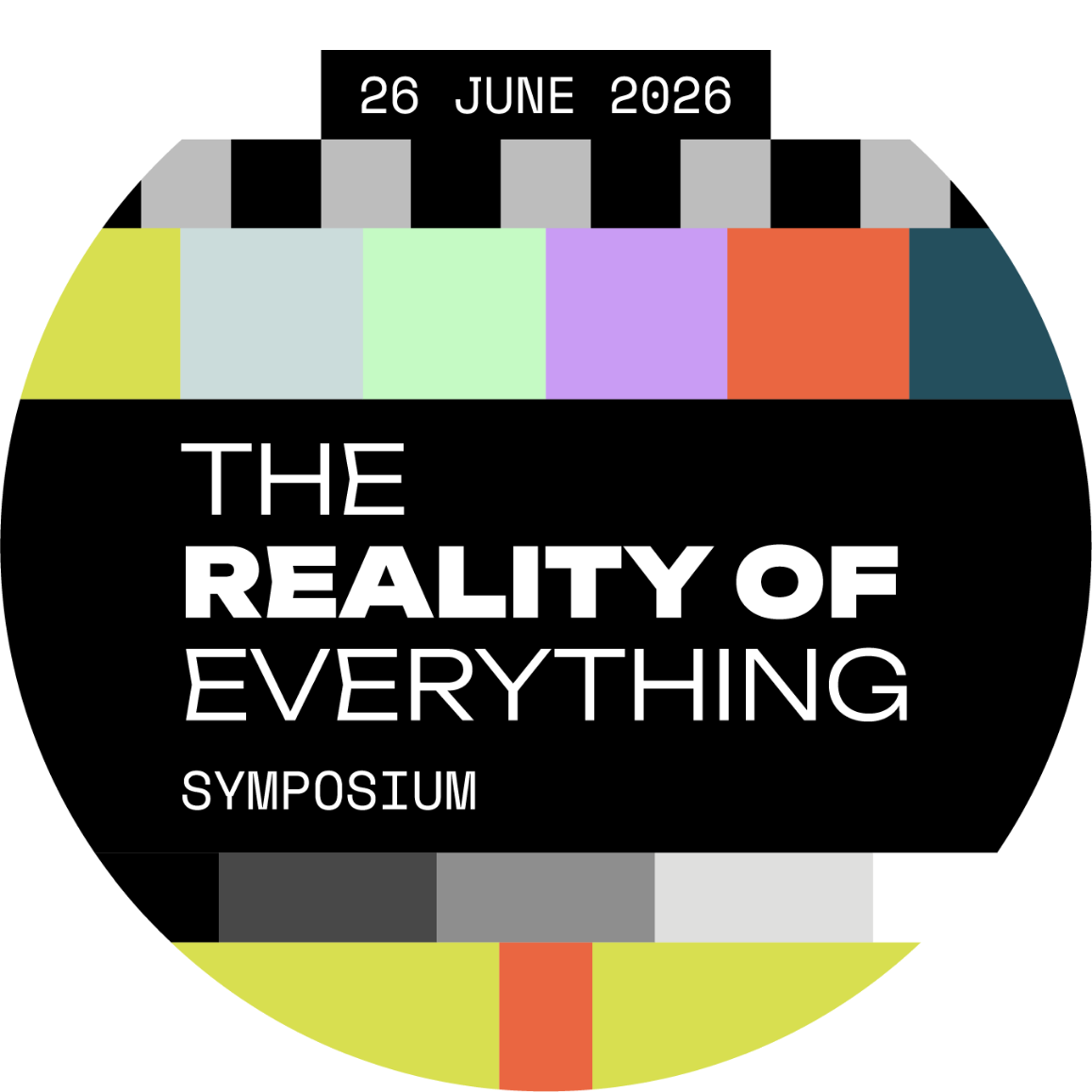
| | The Reality of Everything Symposium - Victoria University of Wellington26 June 2026 A one day symposium bringing together Aotearoa's foremost thinkers on the interconnected crises shaping our future - and what we can do about them. For the first time, this Symposium brings together Aotearoa New Zealand's leading experts on: - the polycrisis - climate change - energy realities - the economy and trade - food security - public health - public finance - deliberative democracy tools and much more. Understand how these critical realities are all interconnected, what is the root cause of the polycrisis, and how together we can take collective action. The symposium sets out to empower New Zealanders through knowledge and awareness, building a critical mass of reality-conscious people across sectors and communities who can amplify this awareness through their spheres of influence. In person tickets have sold out but live stream tickets are still available. Register for the symposium here. |
|
|
|
Weaving Anti-racist Futures – Education Conference
The first ever antiracism conference in Education is being held:
5-6 July 2026
Albany Senior High School, Auckland
This conference is not only for educators, but also for psychologists, policymakers, school boards, researchers, community members, anyone engaged in the education sector, decision-making, or working alongside young people.
Together, we will explore the practical tools and actions necessary to make our schools safer spaces so that young people can thrive. This includes an opportunity to learn about the Takarangi framework for decolonial, anti-racist research which was developed as part of the multi-year WERO (Working to end racial oppression) research project.
Register here |
|
|
|
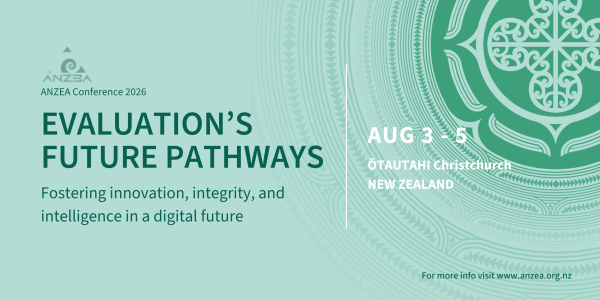
| | ANZEA Conference 2026
Evaluation's future pathways: fostering innovation, integrity, and intelligence in a digital future.
3 - 5 August
Ōtautahi | Christchurch
This year's theme invites us to imagine the future of evaluation by strengthening what only humans can do – our judgement, ethics, relationships, creativity, and storytelling – alongside new tools and technologies.
We’ll be exploring three intertwined “I”s:
Innovation – experimenting with new approaches, roles, and tools (including AI) in ways that respond to real‑world complexity and community priorities, not just trends.
Integrity – holding fast to evaluation ethics, mana‑enhancing practice, Te Tiriti commitments, and cultural responsiveness as the ground we stand on.
Intelligence – valuing human insight, wisdom, and sense‑making: reading context, navigating power, building trust, and weaving findings into stories that move people to action.
At the heart of ANZEA 2026 is a simple idea: evaluation’s future will be shaped less by the tools we use, and more by the kind of humans we choose to be as evaluators.
Find more information here. |
|
|
|
| |
Reimagining Healthy Futures Through Ethnic Minority Lenses
8-9 September 2026
CALL for ABSTRACTS: 1 May to 15 June 2026.
CAHRE Conference 2026 in association with Te Whatu Ora Health Forum on International Collaboration and Diversity Counselling New Zealand
This conference centres ethnic minority voices, lived experiences, cultural knowledge, and evidence-informed approaches to re-envision equitable health futures. We welcome contributions from all disciplines—including public health, social sciences, medicine, policy, community development, anthropology, and Indigenous studies. The 2-day conference is open to academics and researchers, policymakers and service managers, clinicians, community practitioners, and students who work in or are interested in Asian and Ethnic Minority (A/EM) health. It provides an opportunity to hear from experts, develop collaborations, and build networks. |
|
|
|
| | International Indigenous Research Conference 202616-20 November, 2026 Waipapa Taumata Rau, Tāmaki Makaurau.
CALL FOR ABSTRACTS!! Abstract submissions are now invited for the 12th International Indigenous Research Conference (IIRC 2026), an Indigenous‑led, in‑person conference bringing together Indigenous researchers, communities, and allies from around the world.
Conference Theme: Kei tua o te pae | Beyond the Horizon We invite Indigenous‑led research that moves beyond insight into action, research that supports wellbeing, self‑determination, and flourishing Indigenous futures. Submissions must be Indigenous‑led and presented, with the lead presenter clearly identifying their Indigenous or traditional affiliations. and sign up to the E-Panui to stay updated. |
|
|
|
| | International Volunteer Year 2026 (IVY26)
2026 is International Volunteer Year – as declared by the UN General Assembly. Volunteering New Zealand and the Volunteer Centres throughout the motu are planning for this significant event.
The previous International Year of the Volunteer was in 2001, 25 years ago, when Volunteering New Zealand was created. We are proud to be marking 25 years of volunteer support in Aotearoa, New Zealand. Read, Get Ready for International Volunteer Year 2026.
Volunteering New Zealand supports the global Call to Action for the future of volunteering. Read, A Call to Action for the future of volunteering.
IVY 2026 is an opportunity to emphasise the power of volunteering, encourage greater investment in volunteering, and secure commitments from governments and others to support volunteering. Volunteering New Zealand will be asking the community and voluntary sector to co-design our IVY26 Call to Action. |
|
|
|
Our vision is a more equitable, engaged and inclusive Aotearoa informed by community knowledge.
Ko ta mātou whakakitenga he Aotearoa e tōkeke ana, e whai kiko ana, e whakamohio mai ana e te matauranga hapori.
Our Commitment:
We provide our services free of charge to support tangata whenua, and the voluntary and community sectors. Community Research is a registered charity, sustained by donations and grants.
Your Support Matters:
If you value our work, please consider making a donation. Your contribution helps us continue to foster a more connected and informed Aotearoa. |
|
|
|
|
|