|
Keeping you informed about community-led research - for a more inclusive and equitable Aotearoa.
|
|
|
|
|
|
Nau mai haere mai
Whakatairangatia i te mana o te rangahau ā-hāpori me te mahi tahi
Upholding the mana of community knowledge - together |
|
|
|
Kia ora e te whānau,
Over the past month we have been reminded again of the importance of relationships, dialogue, and collective responsibility in shaping the future of Aotearoa.
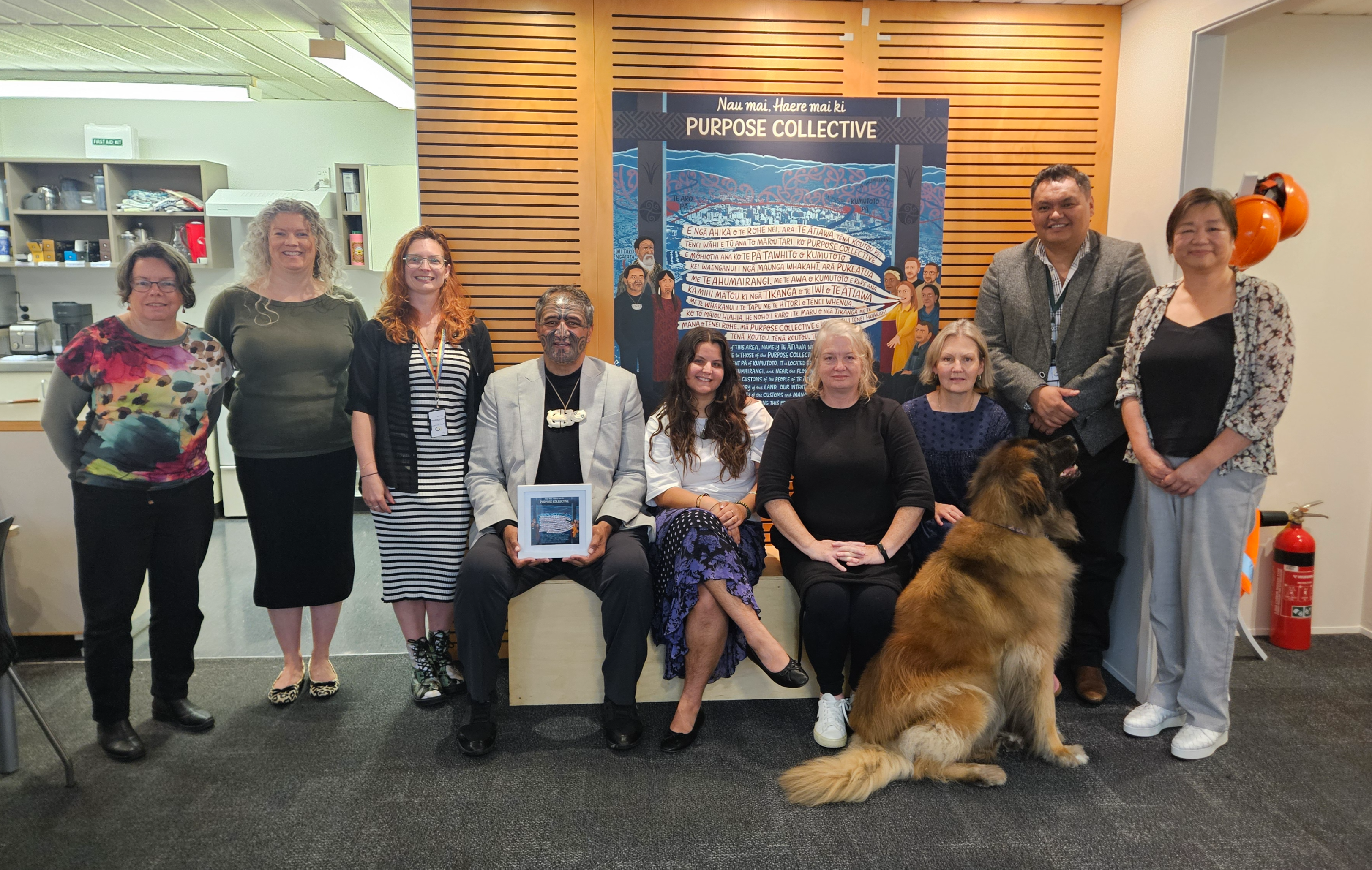
We were honoured to continue strengthening our relationship with Te Āti Awa, including a recent visit from Kura Moeahu(Chair of Te Rūnanganui o Te Āti Awa), whose whakaaro and leadership continue to challenge and inspire our thinking around Te Tiriti, community, and the responsibilities we hold to one another. |
|
At Community Research, we are becoming increasingly concerned about the growing impact of misinformation and disinformation. Misleading narratives shared online do real harm — deepening division, undermining trust, and making it harder to sustain informed and respectful public conversations. At a time when many communities are feeling polarised or unheard — and as Aotearoa moves toward upcoming elections — the way knowledge is created, shared, and challenged matters more than ever. As communities navigate an increasingly complex digital environment, there is a pressing need to better understand how online harm affects social cohesion, democracy, and belonging in Aotearoa. In response, Community Research in collaboration with Tāhono Trust and others is in the early stages of planning for a new special collection focused on online harm. We believe community‑led knowledge has an important role to play in building digital spaces that are safer, more inclusive, and grounded in care and accountability. We look forward to learning alongside communities as this kaupapa develops, and to sharing more in the months ahead. Nā Lorna. |
|
|
|
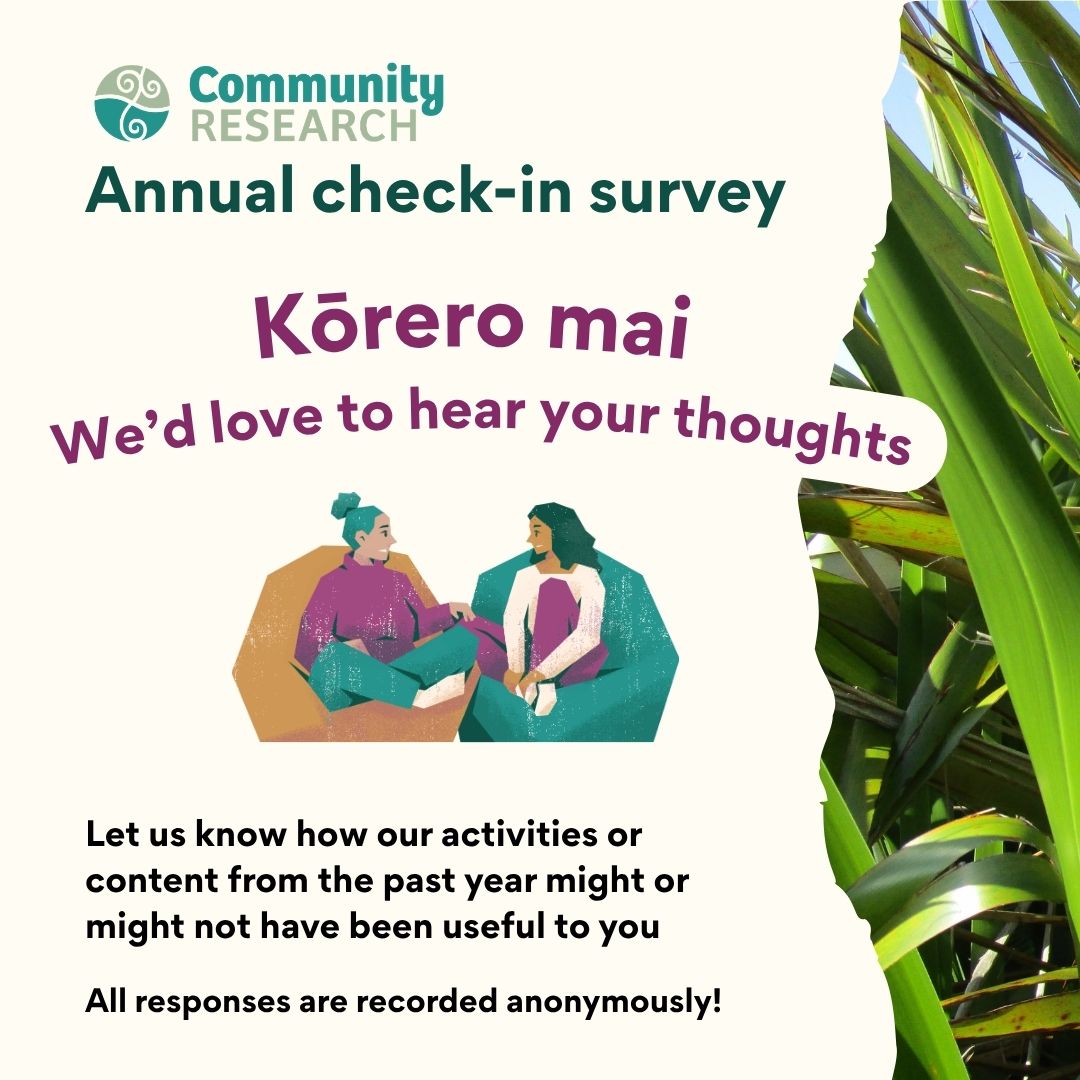
| | FINAL WEEK Share your whakaaro in our 2026 check-in survey
We invite you to provide your thoughts and feedback about Community Research and our activities over the past year by completing a short 5 minute survey. Understanding if and how our activities and content is useful to researchers and communities is fundamental for how we do our work. The feedback from our annual check-in survey helps us to plan better, do less of what isn't useful, and focus more on what is of value to community researchers, knowledge makers and the communities and decision-makers who use this evidence.
We really value hearing from you to help ensure that what we do provides the best value that it can. All survey responses are provided anonymously. Thank you very much to those of you who are able to take the few minutes needed to participate.
Fill out the survey form here. |
|
|
|
Te Auaha Pito Mata Awards 2026
Excitement is building for the Te Auaha Pito Mata Awards, with winners to be announced next month at the official Awards Ceremony at Government House
Nominations have closed, showcasing a remarkable standard that made judging particularly challenging. We thank our dedicated judges for their time, expertise, and whakaaro to support and uplift emerging researchers across Aotearoa.
Ngā mihi maioha Dr Catherine Leonard, Dr Kathie Irwin, Dr Gauri Nandedkar, Assoc Prof Polly Yeung, Dr Janet Tupou, Dr Edmond Feheko, Sandar Duckworth, Mathea Roorda, Garth Nowland-Foreman, Dr Brendan Stevenson and Professor Eleanor Holroyd. |
|
|
|
We are grateful to those who have partnered with us to celebrate new and emerging community researchers |
|
| |
Tangata Whenua community researcher award, sponsored by Faculty of Health and Environmental Sciences, Auckland University of Technology |
|
| The Billie Award for strengths based research or evaluation, sponsored by Garth Nowland-Foreman |
|
|
|
Ethnic, former Refugee and Migrant (EfRM) Researcher Tautoko sessions
Thursday 21 May
12 - 1pm
Thanks to those of you who attended the 11 March online Tautoko session to meet up and help evolve our branding and visibility as a Network. It was great to have an opportunity to share whakaaro (thoughts) and collectively work towards a shared logo and graphic. We are keen to keep the momentum going. Therefore for our May session, we will include time for:
- making connections and informal kōrero
- consolidation of the graphics and colour palate
- discussion about the name of the Network
- whakaaro about potential activities for the year including capacity building and community topic areas, local area meet-ups and regular updates.
Tautoko sessions are held two-monthly with attendance open to both Network and non-Network researchers and allies. They provide a dynamic informal unrecorded space that fosters a collective sense of shared purpose. We celebrate all forms of community-led knowledge-making, whether it’s community-based mahi and mātauranga, or based within organisations, the public service, or academia.
Ngā mihi nui
Bev and Eve
|
|
|
|
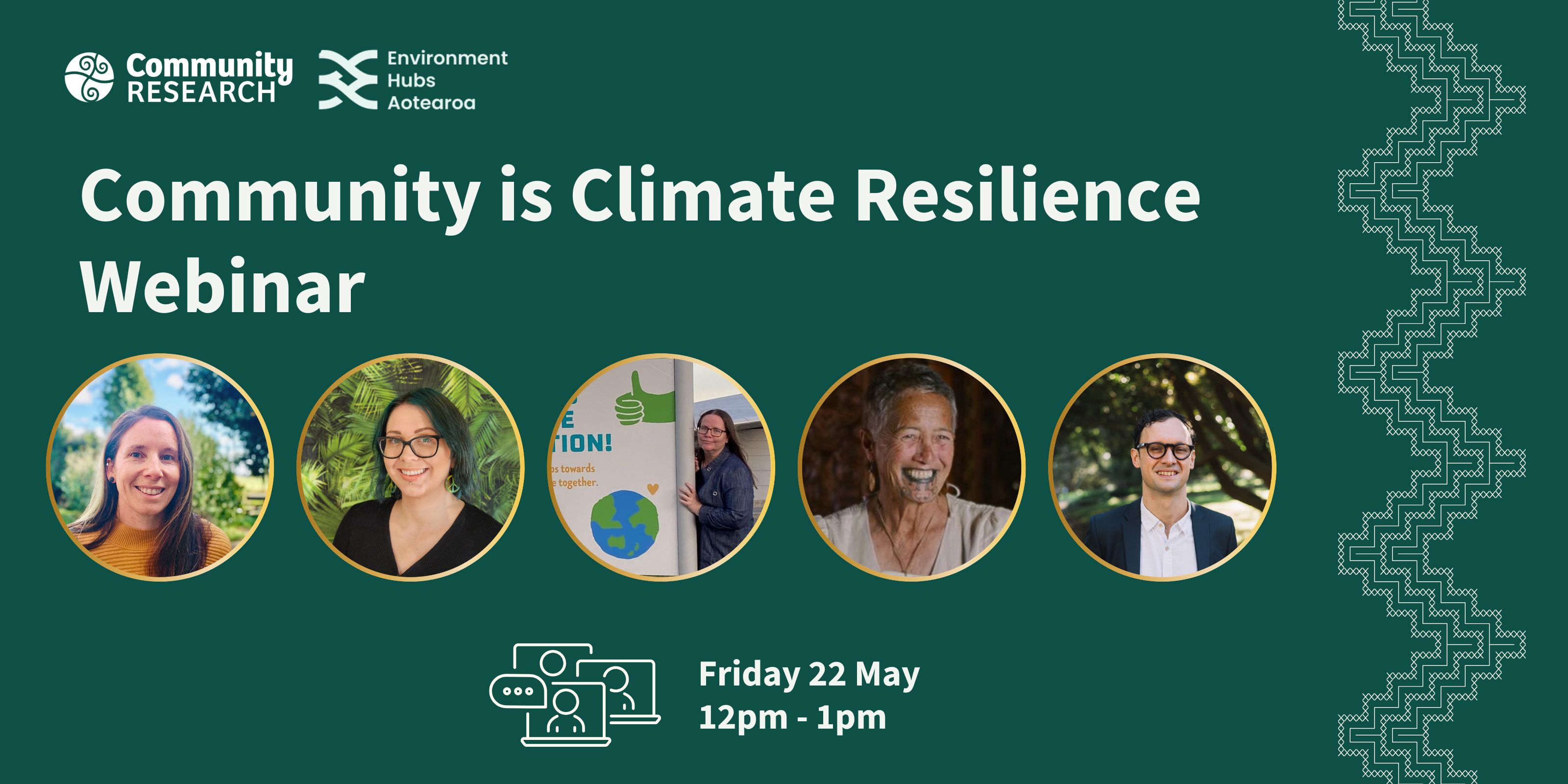
| | Community is Climate ResilienceFriday 22 May 12 - 1pm Community is Climate Resilience is a timely webinar exploring how communities responded to the North Island severe weather events of early 2023, and what these experiences can teach us as extreme weather becomes more frequent and more disruptive. Drawing on the Community is Climate Resilience report published by Environment Hubs Aotearoa in early 2026, this session brings together those who lived the response and those who helped document it. We will hear from Georgina Morisson and Jen Pannell, who produced the report, alongside community responders Harata (Char) Gibson and Emma Horgan, who played key roles in their regions’ responses and will share what unfolded on the ground during and after the events. David Hall, co-founder of Toha Network, will also reflect on the potential of new knowledge and digital technologies to enable and empower community-led responses to climate-related impacts. The webinar explores what worked, what didn’t, and where gaps in official responses were felt most strongly. Rather than focusing solely on systems and institutions, this kōrero highlights the strength, adaptability, and local knowledge that communities bring to crisis response. As climate-related emergencies increasingly affect communities across Aotearoa, there is an urgent need to learn from those with lived experience. This webinar invites participants to reflect on how community-led knowledge, relationships and preparedness are critical components of climate resilience — now and into the future. Register here |
|
|
|
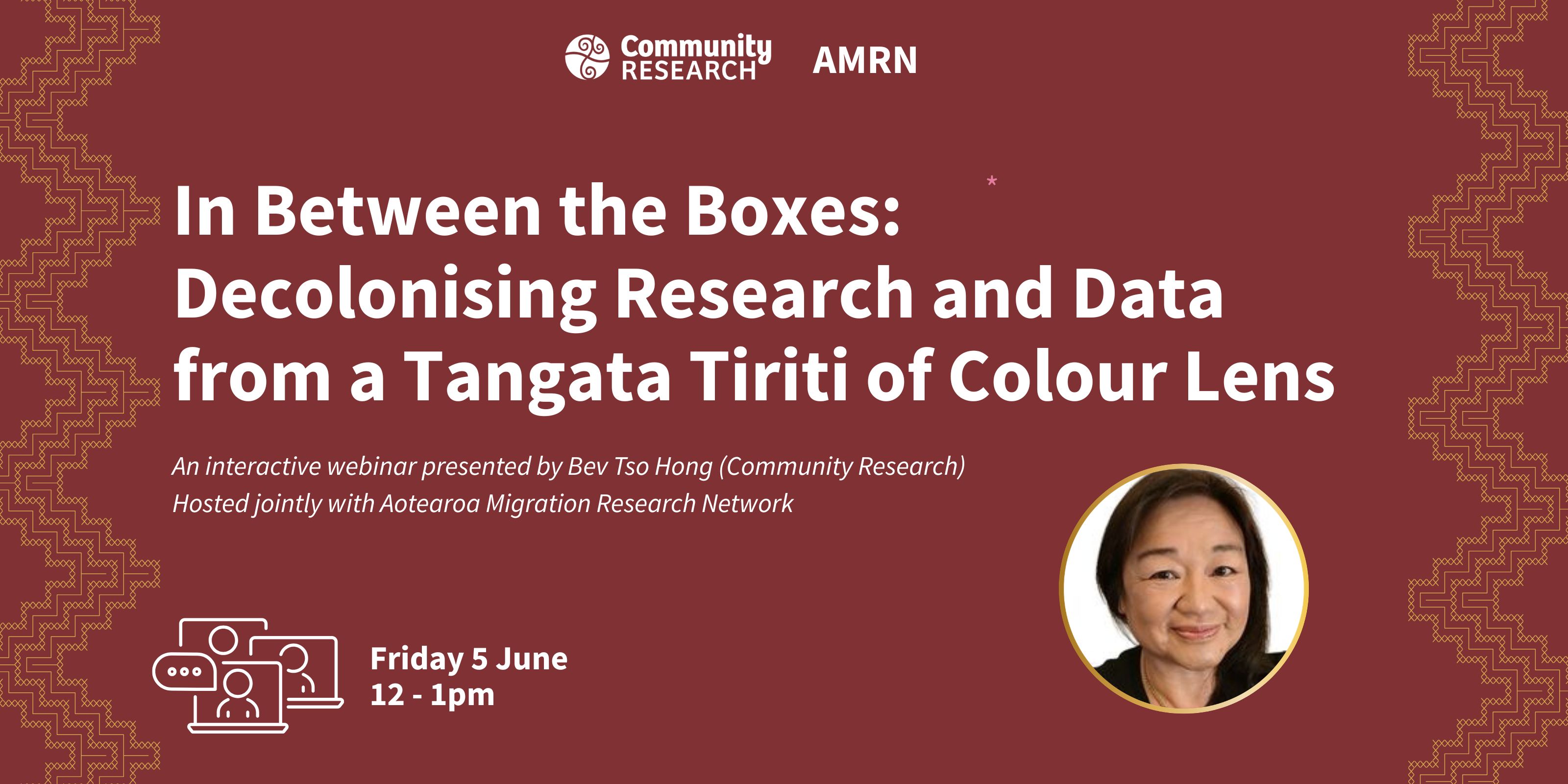
| | In Between the Boxes: Decolonising Research and Data from a Tangata Tiriti of Colour LensFriday 5 June
12 - 1pm Presenter: Bev Tso Hong (Community Research, Aotearoa) Jointly hosted by Aotearoa Migration Research Network (AMRN) and Community Research, Aotearoa.
This webinar takes an “in‑between” or third‑space lens to research decolonisation, grounded in the lived experience of a fourth‑generation Chinese New Zealander, Tangata Tiriti of colour, and social policy researcher. Reflecting across research and community engagement I have undertaken over two decades, we will examine how migrant and intergenerational realities collide with the way our systems define, measure, and respond to people’s lives. This includes how research and evaluation with ethnically diverse, migrant, and former refugee communities can make people both hyper‑visible and invisible in data at the same time – grouped together under broad pan‑ethnic labels or erased through small‑number suppression.
Using my experience in community and policy settings as a starting point, we will explore recurring patterns to consider what a third‑space approach to research and data might look like for ethnic, migrant, and former refugee communities in Aotearoa: noticing where standard boxes and timeframes fail intergenerational realities, designing from relationships and obligations, and treating community knowledge and lived experience as the starting point.
|
|
|
|
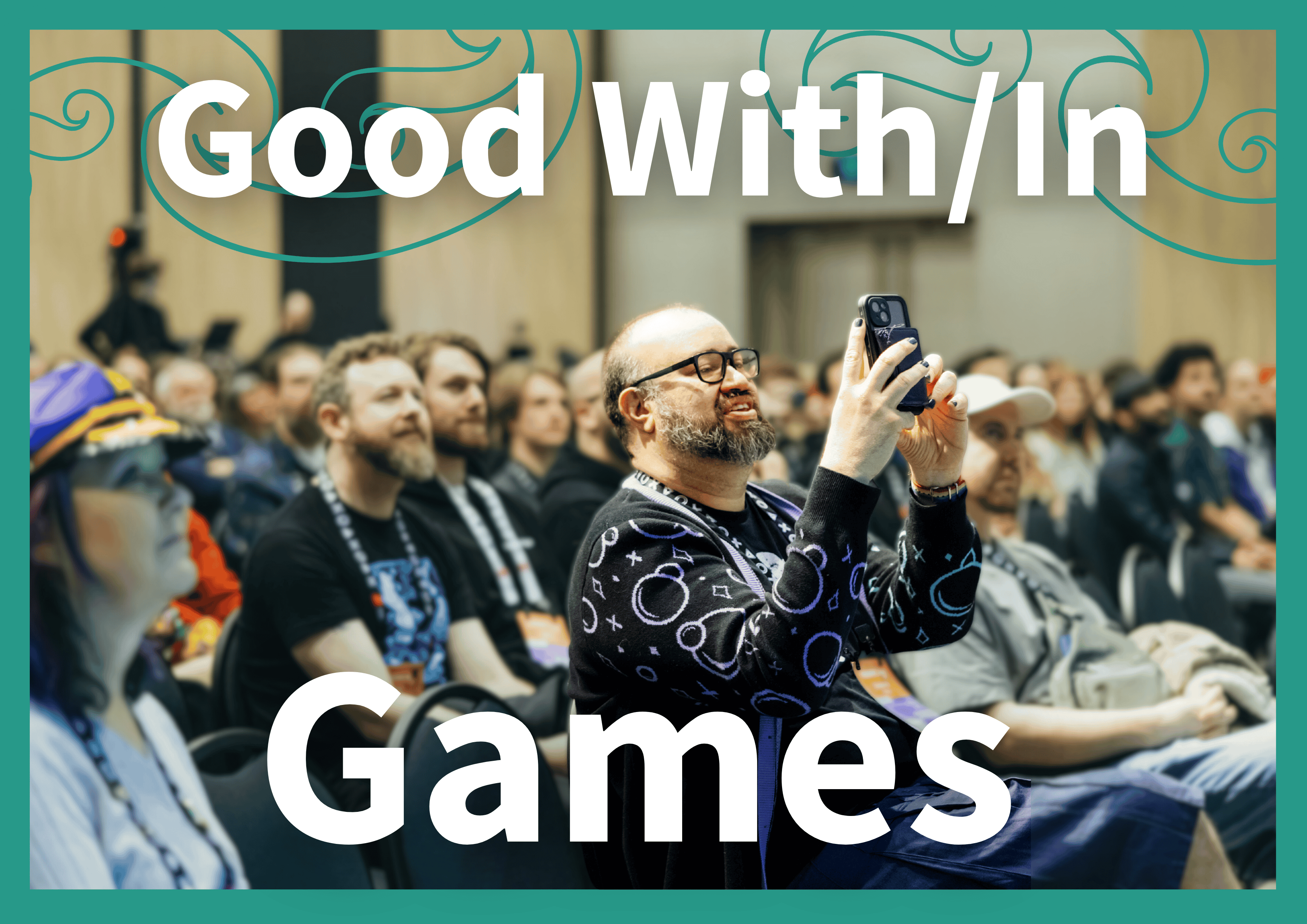
| | Good with/in GamesFrom the Good With/In Games Aotearoa Special Collection, we're spotlighting Amila Nuhodžić's talk about accessibility within organisations: Designing Teams & Production Processes with Accessibility in Mind. Amila's talk features examples of how to make working in games more accessible for people with disabilities - and the fundamentals apply across most fields. Amila uses her own experiences as a person with disabilities and how she's navigated these in her workplaces as a base. She shares the startling statistic of up to 44% of game developers report having mental or physical difference.
|
|
|
|
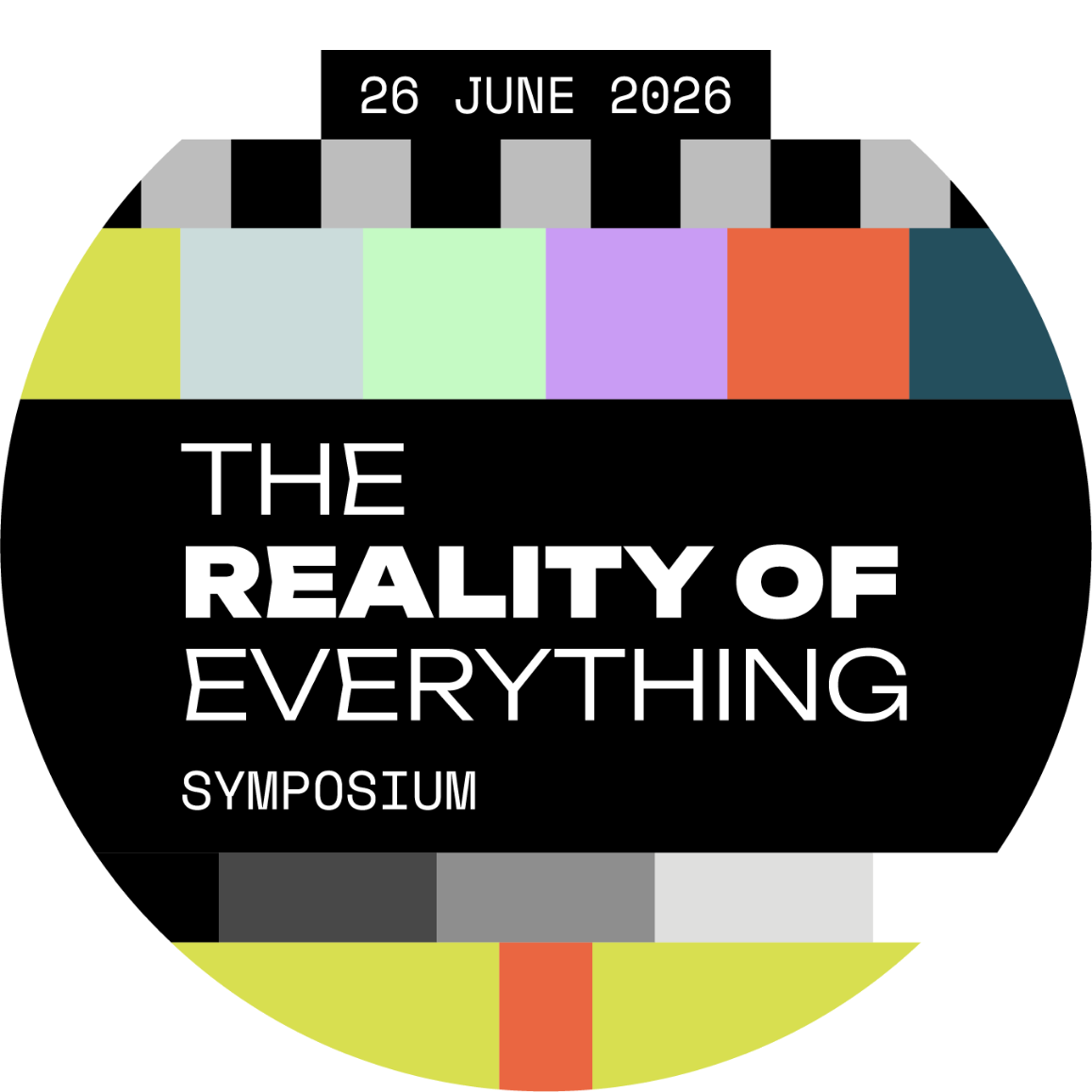
| | The Reality of Everything Symposium - Victoria University of Wellington
26 June 2026
A one day symposium bringing together Aotearoa's foremost thinkers on the interconnected crises shaping our future - and what we can do about them.
For the first time, this Symposium brings together Aotearoa New Zealand's leading experts on:
- the polycrisis
- climate change
- energy realities
- the economy and trade
- food security
- public health
- public finance
- deliberative democracy tools and much more.
Understand how these critical realities are all interconnected, what is the root cause of the polycrisis, and how together we can take collective action.
The symposium sets out to empower New Zealanders through knowledge and awareness, building a critical mass of reality-conscious people across sectors and communities who can amplify this awareness through their spheres of influence.
Register for the symposium here. |
|
|
|
Weaving Anti-racist Futures – Education Conference
The first ever antiracism conference in Education is being held:
5-6 July 2026
Albany Senior High School, Auckland
This conference is not only for educators, but also for psychologists, policymakers, school boards, researchers, community members, anyone engaged in the education sector, decision-making, or working alongside young people.
Together, we will explore the practical tools and actions necessary to make our schools safer spaces so that young people can thrive. This includes an opportunity to learn about the Takarangi framework for decolonial, anti-racist research which was developed as part of the multi-year WERO (Working to end racial oppression) research project.
Register here |
|
|
|
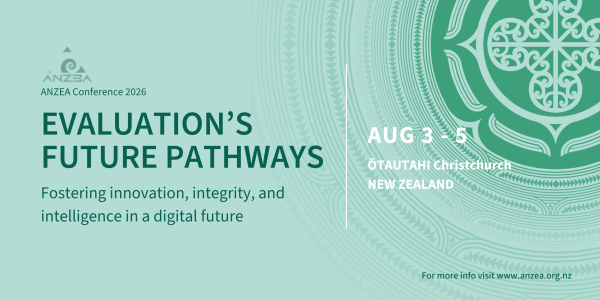
| | ANZEA Conference 2026
Evaluation's future pathways: fostering innovation, integrity, and intelligence in a digital future.
3 - 5 August
Ōtautahi | Christchurch
This year's theme invites us to imagine the future of evaluation by strengthening what only humans can do – our judgement, ethics, relationships, creativity, and storytelling – alongside new tools and technologies.
We’ll be exploring three intertwined “I”s:
Innovation – experimenting with new approaches, roles, and tools (including AI) in ways that respond to real‑world complexity and community priorities, not just trends.
Integrity – holding fast to evaluation ethics, mana‑enhancing practice, Te Tiriti commitments, and cultural responsiveness as the ground we stand on.
Intelligence – valuing human insight, wisdom, and sense‑making: reading context, navigating power, building trust, and weaving findings into stories that move people to action.
At the heart of ANZEA 2026 is a simple idea: evaluation’s future will be shaped less by the tools we use, and more by the kind of humans we choose to be as evaluators.
Find more information here. |
|
|
|
| |
Reimagining Healthy Futures Through Ethnic Minority Lenses
8-9 September 2026
CALL for ABSTRACTS: 1 May to 15 June 2026.
CAHRE Conference 2026 in association with Te Whatu Ora Health Forum on International Collaboration and Diversity Counselling New Zealand
This conference centres ethnic minority voices, lived experiences, cultural knowledge, and evidence-informed approaches to re-envision equitable health futures. We welcome contributions from all disciplines—including public health, social sciences, medicine, policy, community development, anthropology, and Indigenous studies. The 2-day conference is open to academics and researchers, policymakers and service managers, clinicians, community practitioners, and students who work in or are interested in Asian and Ethnic Minority (A/EM) health. It provides an opportunity to hear from experts, develop collaborations, and build networks. |
|
|
|
| |
International Indigenous Research Conference 2026
16-20 November, 2026
Waipapa Taumata Rau, Tāmaki Makaurau.
CALL FOR ABSTRACTS!!
Abstract submissions are now invited for the 12th International Indigenous Research Conference (IIRC 2026), an Indigenous‑led, in‑person conference bringing together Indigenous researchers, communities, and allies from around the world.
Conference Theme: Kei tua o te pae | Beyond the Horizon
We invite Indigenous‑led research that moves beyond insight into action, research that supports wellbeing, self‑determination, and flourishing Indigenous futures. Submissions must be Indigenous‑led and presented, with the lead presenter clearly identifying their Indigenous or traditional affiliations.
and sign up to the E-Panui to stay updated.
|
|
|
|
| | International Volunteer Year 2026 (IVY26)
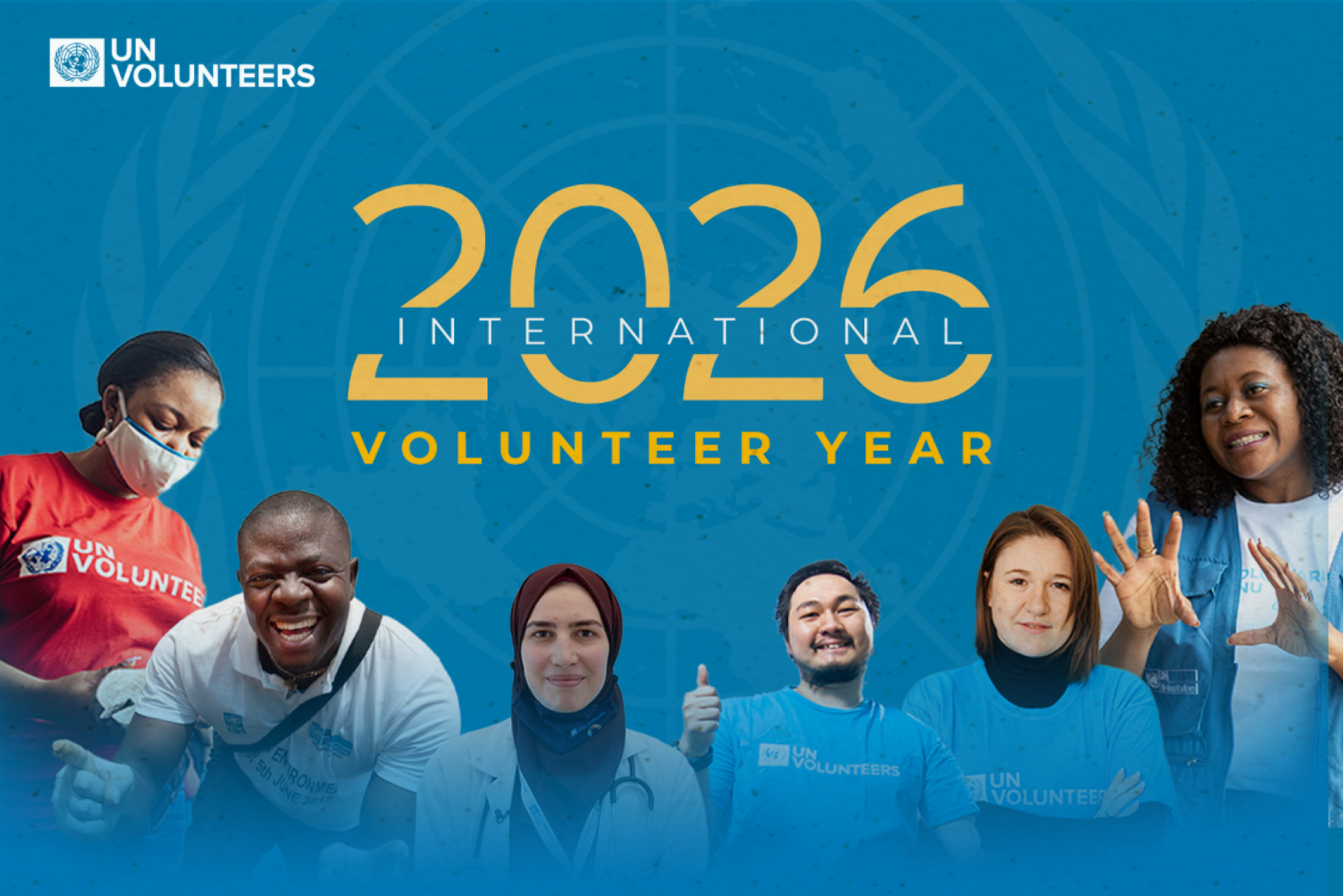
2026 is International Volunteer Year – as declared by the UN General Assembly. Volunteering New Zealand and the Volunteer Centres throughout the motu are planning for this significant event.
The previous International Year of the Volunteer was in 2001, 25 years ago, when Volunteering New Zealand was created. We are proud to be marking 25 years of volunteer support in Aotearoa, New Zealand. Read, Get Ready for International Volunteer Year 2026.
Volunteering New Zealand supports the global Call to Action for the future of volunteering. Read, A Call to Action for the future of volunteering.
IVY 2026 is an opportunity to emphasise the power of volunteering, encourage greater investment in volunteering, and secure commitments from governments and others to support volunteering. Volunteering New Zealand will be asking the community and voluntary sector to co-design our IVY26 Call to Action. |
|
|
|
| | Good Practices for Political Engagement and Influencing
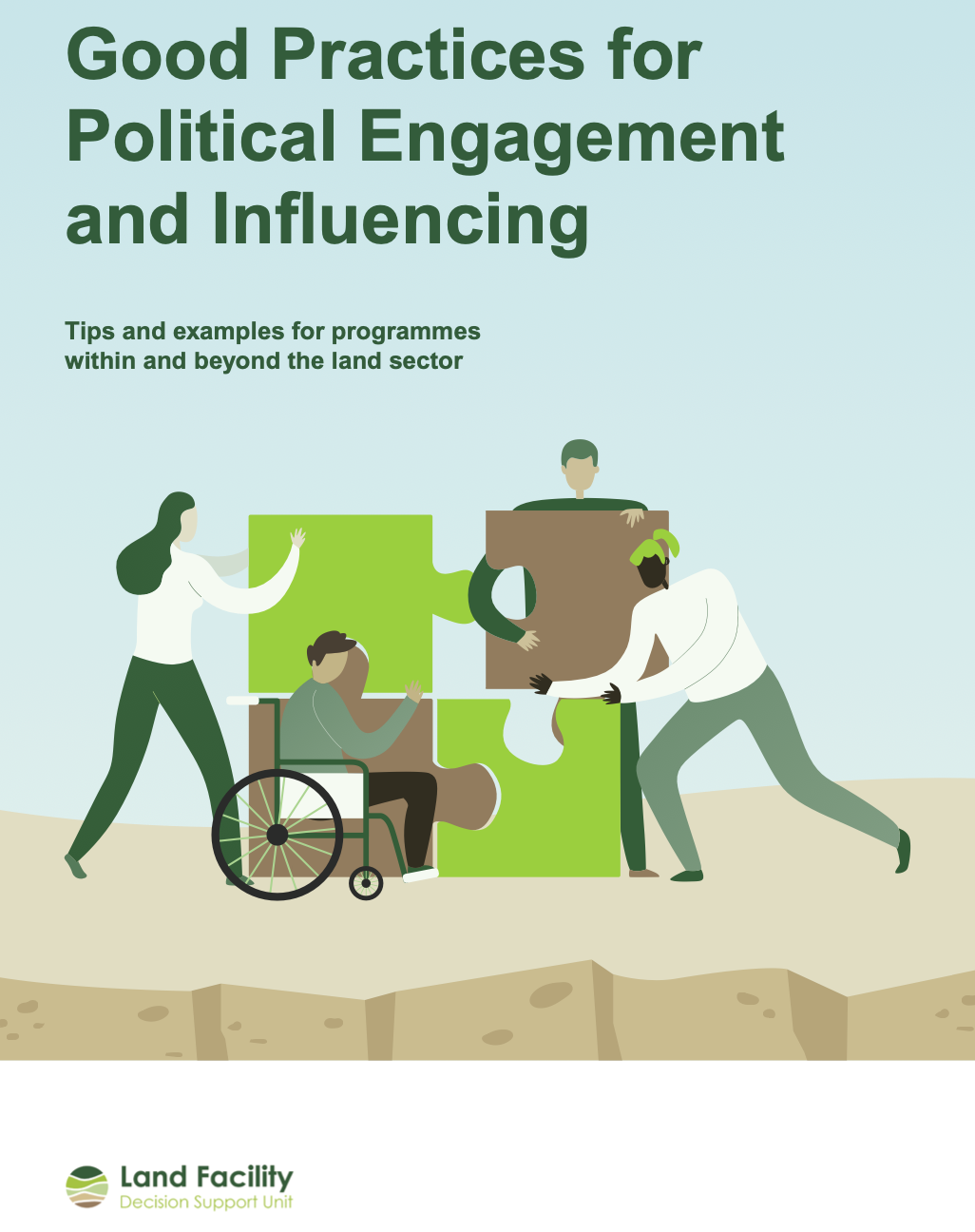
This resource is based on a review of literature and practical resources on policy influencing and engagement and includes diverse examples of engagement approaches used across the world to influence different policy outcomes in various ways. It illustrates how purposeful, creative and adaptive policy engagement approaches must be grounded in an understanding of the political economy context.
This resource is neither exhaustive nor comprehensive, and it does not recommend any single approach. Rather, practitioners from the land sector and other sectors can use it to draw inspiration from existing influencing tactics, helping them to respond directly to their political economy analysis findings and meet their influencing goals.
|
|
|
|
| |
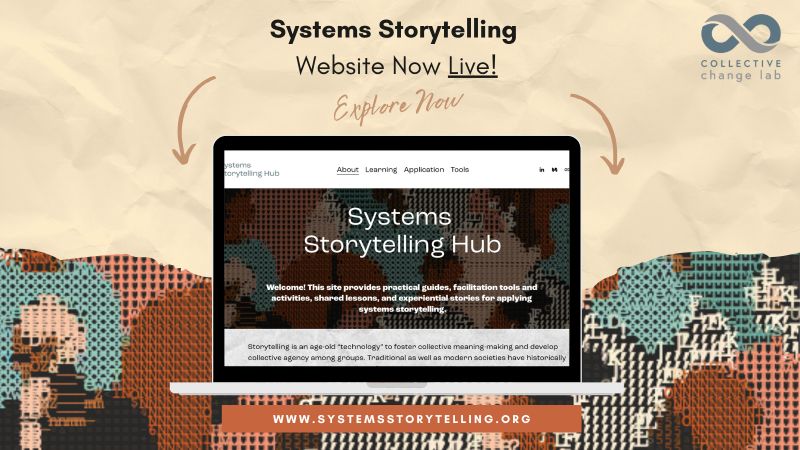
Launch of the Systems Storytelling Hub
Inside, you’ll find practices, provocations, and pathways to help you engage storytelling not just as a tool for communication, but as a way of sensing and shaping systems. A way of listening differently. A way of making visible what is often unseen. A way of nurturing the conditions for change to take root and ripple outward.
The Hub brings together emerging thinking, practices, and reflections from the Systems Storytelling field, inviting us to see storytelling not as an accessory to systems change, but as one of its active forces. It is where narrative, meaning-making, and systems practice meet; where we begin to ask what it means to work with story as a living part of transformation.
We offer this as an invitation to practitioners, storytellers, organisers, and sense-makers, who are exploring how new stories might open new possibilities for how we live, relate, and change systems together.
You can explore the Hub here
|
|
|
|
| | Free Community Digital Accessibility Workshops
Learn how to make your community content easier for everyone to use. These free, practical workshops from Access Advisors will help you create online information that works well for disabled people, older people, and anyone who finds digital tools hard to use.
You will learn simple, useful skills you can use straight away. Participants will leave these sessions with clear next steps, practical tools, and confidence to implement accessibility beyond immediate content fixes. The focus is on sustainable, real-world application, fostering inclusive practices across the organisation.
- Easy steps to make your websites, documents, and social media more accessible
- Real examples and hands-on activities
- Advice you can use the same day
- A friendly space to ask questions
- Free resources to take away.
Register here to attend one of these workshops. |
|
|
|
Our vision is a more equitable, engaged and inclusive Aotearoa informed by community knowledge.
Ko ta mātou whakakitenga he Aotearoa e tōkeke ana, e whai kiko ana, e whakamohio mai ana e te matauranga hapori.
Our Commitment:
We provide our services free of charge to support tangata whenua, and the voluntary and community sectors. Community Research is a registered charity, sustained by donations and grants.
Your Support Matters:
If you value our work, please consider making a donation. Your contribution helps us continue to foster a more connected and informed Aotearoa. |
|
|
|
|
|