|
Keeping you informed about community-led research - for a more inclusive and equitable Aotearoa.
|
|
|
|
|
|
Nau mai haere mai
Whakatairangatia i te mana o te rangahau ā-hāpori me te mahi tahi
Upholding the mana of community knowledge - together |
|
|
|
It's been a busy month for Community Research.
We recently welcomed Florence Cook, who is completing their Master’s in Global Studies at Te Herenga Waka—Victoria University of Wellington and has joined Community Research as an intern. Florence is supporting our mahi to develop a special collection focused on understanding, preventing, and addressing online harm in Aotearoa, in collaboration with Tāhono Trust, Amnesty International, and others working in this space.
We’re delighted to announce the first two webinars in our new series featuring the six Te Auaha Pito Mata Award recipients. Across the series, you’ll hear directly from the recipients as they share their research, insights, and aspirations for change.
Our first webinar, on 25 August, features Corrina Thompson, recipient of the Community Researcher Award. Corrina was recognised for research that centres lived experience as expert knowledge and is already making a tangible difference in the community.
Our second webinar features Paula Ormsby, recipient of the Billie Award, and researcher Paora Moyle. Paula was recognised for her outstanding contribution as a community researcher to Tīhei Wāhine Ora: Wāhine from Gang Whānau Healing Intergenerational Trauma, a Health Research Council-funded project led by Paora. The research was launched at Parliament last week.
Links to register for the first webinar are below. We’ll share the remaining webinar dates, speakers, and registration details soon.
With the election approaching, now is a good time to remember that democracy works best when we all take part—and the first step is making sure you’re enrolled, and your details are up to date. See below for more details.
Nā Lorna. |
|
|
|
Make sure you’re ready to vote
The rules have changed for the 2026 General Election. Unlike the last two elections, you won’t be able to enrol when you go to vote. You must be enrolled—and have updated your address if you’ve moved—by midnight on 25 October 2026. Voting begins on 26 October. If you miss the enrolment deadline, you won’t be able to vote. Enrol, check or update your details: - Online at vote.nz using your New Zealand driver licence, passport, or verified RealMe identity
- Call 0800 36 76 56 to have an enrolment form sent to you
- Free-text your name and address to 3676 to receive a form by post
Please spread the word. Think about the people in your whānau, community, or workplace who may not know about these changes, and help them get enrolled. Every voice matters—and being enrolled is the essential first step. Keep an eye out for more activities encouraging participation over the coming months. |
|
|
|
Photo caption: Perspectives on AI - Kinnect panel session (Adrian Field, Kate McKegg, Nan Wehipeihana, Judy Oakden and Julian King).
Bev attended the 2026 Aotearoa New Zealand Evaluation Association (ANZEA) Conference in Ōtautahi Christchurch. Marking the 20th anniversary of ANZEA , the event focused on future pathways for evaluation including artificial intelligence (AI), systems change, skills, voice and community. Bev's initial reflections on AI include: - Centring Human Relationships - we must ensure that the relational, human involvement that brings together diverse values and dynamic contexts remains central to evaluation practice.
- Looking Beyond Efficiencies - we need to think beyond productivity gains and focus on community and societal wellbeing outcomes. A statement repetitively made was "but we're not there yet" - what does "there" actually look like? (And for whom?)
- Ensuring Human-in-the-Loop Approaches - there were diverse perspectives on use of AI in evaluation and the value/efficiencies it can provide - common to all was the need for "human in the loop" approaches.
- Addressing Ethical AI Representation - how can we ensure that AI based representations relating to diverse communities (such as Avatars) are ethical, transparent, and used with integrity? Should they be used at all? When and how?
- Navigating the Future - we can't put the genie back in the bottle but we can be considered and cautious about the implications of its use. Opportunities for on-going, open dialogue on these issues are essential.
|
|
|
|
| | This Aotearoa New Zealand Evaluation Association (ANZEA) Special Interest Group (SIG) follows on from a "Tauiwi" forum held at the 2024 ANZEA conference and a November 2025 online session hosted by Eemun Chen (Ethnic Research Aotearoa). It brings together diverse ethnic tauiwi voices in the ANZEA evaluation space. Following on from a booth at the recent 2026 conference, we invite evaluation practitioners to register their interest in this SIG. You do not need to be an ANZEA member to register. Community Research will be hosting an online hui later in the year to discuss and help consolidate the aims and focus of this group and how it could operate.
Register here. |
|
|
|
Mapping the decolonial equity framework ecosystem: a comparative analysis of Critical Tiriti Analysis, Discursive Tiriti Analysis, Progress World View and Discursive Equity Analysis
Matt Broadway-Horner
This paper offers (as far as the author is aware) the first systematic comparison of four decolonial equity frameworks: Critical Tiriti Analysis (CTA), Discursive Tiriti Analysis (DTA), Progress World View (PWV) and Discursive Equity Analysis (DEA). CTA, developed by Came and colleagues, evaluates policy against Te Tiriti o Waitangi principles through a five-stage process ending in a Māori Final Word. DTA extends this by applying critical discourse analysis to examine how policy language; such as the "needs not race" framing in a 2024 NZ Cabinet Circular, can undermine Treaty obligations while appearing neutral. PWV, developed by Broadway-Horner, operates at the clinical level rather than the policy level, offering therapists a three-part model (history, interdependency, progress futures) for decolonising mental health care with sexual minority clients. DEA adapts CTA's structure and the "6As" health-equity framework to assess whether services and policies create structural barriers for sexual minorities, closing the loop between Indigenous and sexual-minority-focused methodologies.Read the research here. |
|
|
|
In this webinar the speakers will take us through some of their respective recent research, and then we will move into a panel discussion on some of the complexities and privileges of researching within takatāpui and rainbow communities. We will also have space for Q&A with the audience.
The speakers all have contributed to Community Research's special collection, and this webinar is an opportunity to celebrate research which is led from within our communities, uplifting LGBTTQIA+ voices and experiences.
|
|
|
|
The Community Research Te Auaha Pito Mata Awards are held to celebrate the impact of emerging researchers whose work uplifts communities, strengthens knowledge, and creates positive change in Aotearoa. This webinar series introduces the 2026 Award winners and offers an opportunity to hear directly from these inspiring researchers as they share their work, insights, and aspirations for the future.
In this webinar, we meet Corrina Thompson, winner of the Community Researcher Award, and learn about her research ‘Learning from lived experience: How phenomenology could help transform Aotearoa’s justice system and navigate the barrier of public opinion.’
This innovative, community-led research centres the experiences of children of people in prison—tamariki who are often invisible in public debate yet over-represented across indicators of adversity. It explores how solutions can be shaped by those most affected by intergenerational harm.
Corrina will present an overview of the project and reflects on her experience as a researcher.
She also discusses how the research has informed her current work and what she sees as the next steps.
Facilitated by Jennifer Leahy, Adult Education Consultant and Facilitator and Community Research Kaitiaki. Jennifer has also been a member of the Pillars whānau having worked as a facilitator of the Pillars workshop, “The Invisible Sentence”., a volunteer facilitator of whanau support groups and a former Pillars Board member.
Click here to register for the webinar and here to read Corrina's research. |
|
How do migration, culture, identity, family expectations and wider system barriers shape the mental health and addiction experiences of Asian communities in Aotearoa New Zealand? More importantly, what does culturally responsive care look like in everyday practice?
This webinar introduces Asian Family Services’ Integrated Tree Model©, a culturally grounded framework developed to support Asian mental health, addiction and wellbeing practice. Using the metaphor of a transplanted tree, the model helps practitioners understand how a person’s roots, trunk, branches and surrounding environment interact to influence wellbeing, distress, coping and recovery.
Rather than presenting the Integrated Tree Model© only as a theory, AFS will share how it is being applied through its dedicated Asian mental health and addiction services, highlighting practical lessons for culturally responsive frontline care.
Watch the recording here. |
|
Recording now available!
This webinar is presented by Bev Tso Hong (Community Research) and hosted jointly with Aotearoa Migration Research Network.
This interactive webinar takes an “in‑between” or third‑space lens to research decolonisation, grounded in the lived experience of a fourth‑generation Chinese New Zealander, Tangata Tiriti of colour, and social policy researcher. Reflecting across research and community engagement I have undertaken over two decades, we will examine how migrant and intergenerational realities collide with the way our systems define, measure, and respond to people’s lives. This includes how research and evaluation with ethnically diverse, migrant, and former refugee communities can make people both hyper‑visible and invisible in data at the same time – grouped together under broad pan‑ethnic labels or erased through small‑number suppression.
Using my experience in community and policy settings as a starting point, we will explore recurring patterns to consider what a third‑space approach to research and data might look like for ethnic, migrant, and former refugee communities in Aotearoa: noticing where standard boxes and timeframes fail intergenerational realities, designing from relationships and obligations, and treating community knowledge and lived experience as the starting point. Participants will be invited to connect these ideas to their own projects – as researchers, community practitioners, or analysts – and to consider what it would mean, in practical terms, to challenge the categories they use, the stories they tell with data, and the accountabilities they hold in an increasingly diverse Aotearoa.
Watch the recording here. |
|
|
|
Tautoko Network Update - Ethnic former refugee and migrant researchers
Kia ora koutou
A brief update to let you know that we are continuing to bring together options for discussion about Network branding, visibility, infrastructure and how it might best operate and be useful for members. We will be sending out a pānui in the next few weeks to outline next steps and for the next Tautoko session.
If you have any questions, please contact Bev - tautoko@communityresearch.org.nz
Ngā mihi nui,
Bev and Eve. |
|
|
|
New Connection planning for Aotearoa's RSIT sector
What is Kanapu Connect?
Kanapu Connect will be a navigation platform produced by Kanapu and Kiwa Digital to improve knowledge, access and connection for users amongst the research, science, innovation and technology (RSIT) sector in Aotearoa, NZ. The platform will consist of two key functions. The first is a profile function where users can visualise their networks as an interactive web. As a user you can interact, connect with and contact others, find expertise, and discover opportunities that organisations promote on Kanapu Connect.
· Make a profile for yourself and your organisation
· Add a connection in less than 15 seconds
· Promote the opportunities your organisation has to offer
· Use connection tags to express how you want to connect
· Use Focus Area | Kaupapa tags to share your areas of expertise
The second main feature is a Learning Hub. This provides accessible, well-organised and digestible information on the RSIT landscape in Aotearoa. Its main purpose is to help users at all career stages better understand and navigate the sector.
· View and engage with the RSIT sector ecosystem in one place
· Just enough information to pique your interest and point you in the right direction |
|
|
|
| | A new peak body has been established to amplify the work of op shops across Aotearoa New Zealand, and to communicate the massive impact op shops generate in terms of social, environmental and economic benefits.
The Aotearoa New Zealand Reuse Impact Study Executive Report that details all the findings to provide you with a snapshot of how important op shops are in terms of triple bottom line impact.
Read the report here. |
|
|
|
| | The whāki webinar for Hūrae focused on the Māori Data Sovereignty (MDSov) movement, which advocates for Māori rights and interests in data, and works to ensure that Māori data supports Māori aspirations. The language of MDSov has now been used for a decade, as conceptualised in Aotearoa by Te Mana Raraunga and globally through the Global Indigenous Data Alliance. To mark this decade, this Journal of the Royal Society of New Zealand (JRSNZ) special issue takes stock of developments within MDSov and how researchers have implemented these principles in diverse disciplines and science.
|
|
|
|
| |
You don't need a dedicated sustainability team to start taking meaningful climate action - Join Esther Whitehead, CSI Associate and Climate Lead of FCCA - The Funders’ Commitment on Climate Action, on Wednesday 26 August for a practical online session designed for not-for-profit organisations looking to develop a simple and sustainable climate strategy.
From 10.30am – 11.30am, Esther will explore how to:
- Identify your organisation's biggest sources of climate impact,
- Develop a realistic climate strategy and action plan,
- And use practical tools and resources to embed climate action into your everyday mahi.
Participants will also hear more about our Climate Action Tools Hub, packed with resources to help you get started on your climate action journey. Whether you're just getting started or are looking for a practical framework to guide your organisation's climate journey, this session will equip you with the knowledge and tools to turn good intentions into action.
Register for the session here. |
|
|
|
| | New Horizons for Women: Hine Kahukura is a nationwide charitable trust. Our purpose is to support education, innovation and research that benefits women.
APPLICATIONS ARE OPEN!
Please visit their award pages to access the application links
Applications Close 25th of August 2026 |
|
|
|
| | Sector Needs Survey
What would help your organisation strengthen its leadership and governance right now? We're working together across the sector to understand what's really needed on the ground. That's why we're asking leaders, managers, board members and volunteers in community organisations to share what's working, what's challenging, and where support would make the most difference to your mahi. The insights you share will help us all build better resources and support for organisations like yours. There are also prizes to be won. It takes about 10 minutes and every voice matters.
Complete the survey here.
|
|
|
|
| | When: 17-20 November, 2026 Where: Waipapa Taumata Rau, Tāmaki Makaurau.
Conference Theme: Kei tua o te pae | Beyond the Horizon
For over 20 years, Ngā Pae o te Māramatanga, working alongside Indigenous communities, has supported Indigenous‑led research and challenged dominant ways of creating and sharing knowledge. This work has expanded ngā pae o te māramatanga — horizons of insight and created meaningful change grounded in Indigenous worldviews, practice, and lived experience.
At IIRC 2026, we ask: what comes next?
Join us as we look beyond the horizon toward a future that supports wellbeing, self‑determination, and flourishing Indigenous communities, while offering knowledge, leadership and hope for generations to come.
Find out more about the conference and register here. |
|
|
|
| | XV ANZSEE Biennial Conference
Regenerative Futures, Imagining Alternatives, Transforming Systems
When: 30 September - 3rd October 2026
Where: Te Whanganui a Tara, Wellington
The ANZSEE 2026 conference will bring together people from government, education and research, practitioners, consultancies, and NGO and community sectors, helping solve problems at local-regional-global scales drawing from ecological economics and its trans-disciplinary perspectives. With a natural focus on Oceania as a region but also on local issues and those that permeate the globe, the conference will help synthesise global “post-growth” and “planetary boundary” discourses with a specific focus on the unique social-ecological and political vulnerabilities including those of the Pacific. The gathering will center on the integration of Indigenous stewardship and decolonised economic frameworks to address climate adaptation, while prioritising island and maritime resilience over traditional growth-centric metrics.
Find out more about the conference and register here. |
|
|
|
| | Volunteering New Zealand Conference 2026
When: 16 October 2026
Where: Rotorua
Step into International Volunteer Year with the conference built for leaders who are changemakers. Powered by fresh research, bold ideas, and the real stories shaping volunteering in Aotearoa, this is where insight becomes action.
Discover what’s next. Strengthen your practice. Champion the future of volunteering.
Join us — and lead the change.
Find out more about the conference and register here.
|
|
|
|
| |
When: 8-9 September 2026
Where: Ōtautahi, Christchurch
Early bird registration closes this Friday 14 August!
This conference centres ethnic minority voices, lived experiences, cultural knowledge, and evidence-informed approaches to re-envision equitable health futures. We welcome contributions from all disciplines—including public health, social sciences, medicine, policy, community development, anthropology, and Indigenous studies. The 2-day conference is open to academics and researchers, policymakers and service managers, clinicians, community practitioners, and students who work in or are interested in Asian and Ethnic Minority (A/EM) health. It provides an opportunity to hear from experts, develop collaborations, and build networks. Register for the conference here. |
|
|
|
Tātou Tātou
ALL OF US, ALL TOGETHER: BUILDING AN AOTEAROA FOR ALL The not-for-profit (NFP) sector is facing unprecedented funding cuts and reduced government support, while demand for services and operating costs continue to rise. Tātou Tātou: Building an Aotearoa for all is a one-day hui that will bring NFPs and funders together to: Share the impact of funding shortfalls. Discuss why investment in NFPs matters and where it is needed most. Share a vision of a society that benefits all Kiwis and how we achieve it. This hui is being organised in a voluntary capacity, and is FREE to attend.
Date: Thursday 20, August Time: 9am-5pm, with tea and coffee available from 8.30am.
Venue: Harbourside, 4 Taranaki Street, Te Aro, Wellington 6011
If you're interested, please email Jess Bleach (jb@manacommunications.com) with the names of people from your organisation who will attend. |
|
|
|
| |
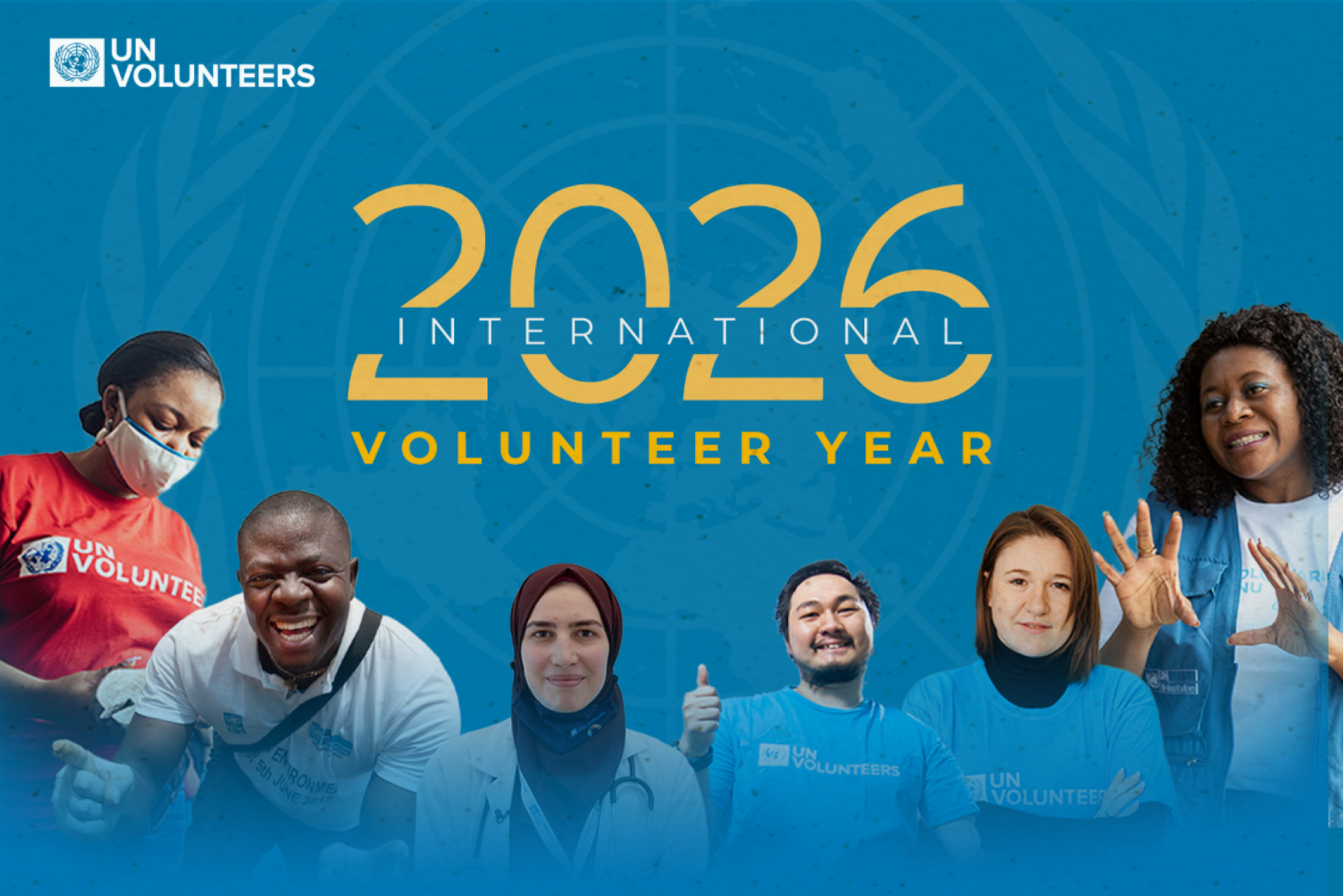
2026 is International Volunteer Year (IVY26) – as declared by the UN General Assembly. Many community organisations are backing the year as an opportunity to promote and support volunteering.
IVY 2026 is an opportunity to emphasise the power of volunteering, encourage greater investment in volunteering, and secure commitments from governments and others to support volunteering.
Volunteering New Zealand has been asking people in the community sector what would improve the future of volunteering towards an IVY26 Call to Action.
|
|
|
|
Our vision is a more equitable, engaged and inclusive Aotearoa informed by community knowledge.
Ko ta mātou whakakitenga he Aotearoa e tōkeke ana, e whai kiko ana, e whakamohio mai ana e te matauranga hapori.
Our Commitment:
We provide our services free of charge to support tangata whenua, and the voluntary and community sectors. Community Research is a registered charity, sustained by donations and grants.
Your Support Matters:
If you value our work, please consider making a donation. Your contribution helps us continue to foster a more connected and informed Aotearoa. |
|
|
|
|
|