Welcome.
This monthly e-shot shares the latest information on Communities that Work, highlights some of our members' outstanding work, and keeps you informed about upcoming events.
In this edition, we reflect on a recent Resolution Foundation event exploring solutions to NEET employment, including contributions from our members and the vital role of personalised, community-led support. Alongside this, we spotlight new research and practical tools, from strengthening community engagement through heritage to understanding the opportunities and challenges of AI in local government and the need to densify our cities to support growth.
We also share key policy developments, including welfare reform, the Government’s Youth Guarantee, and changes to Right to Buy.
There are also opportunities to get involved, from contributing to the 2026 Youth Voice Census to joining upcoming sector events.
Our Spotlight shines a light on South Yorkshire Housing Association (SYHA), a JobsPlus lead and exemplar in community engagement, employment support and genuine, lasting transformation across households and neighbourhoods.
Shining a light on tackling NEET employment
|
|
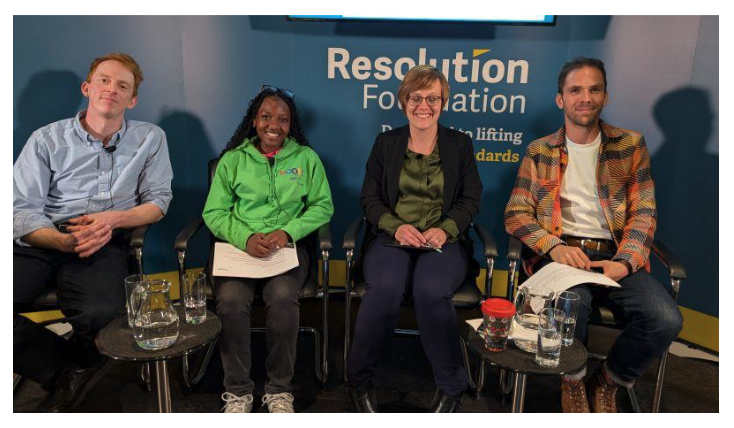
We were delighted to see such a strong and insightful discussion at the Resolution Foundation’s recent event on tackling the challenges of young people not in education, employment or training (NEET). The session brought together expert voices from across policy and practice, with contributions from Nye Cominetti (Resolution Foundation), Ruth Curtice (chair), John Burn-Murdoch (Financial Times) and Hannah Kitchen (OECD). The conversation highlighted three clear priorities: further education funding, employment support, and mental health support. A particular highlight for us was hearing from Abigail Zimba on behalf of BOOST Employment Support, a service delivered by JobsPlus lead, The Barnet Group. Abigail brought invaluable, real-world insight from working directly in local communities, emphasising the importance of personalised, place-based support that meets people where they are. Leyton JobsPlus visit This month, we hosted a site visit to Leyton JobsPlus, showcasing the positive impact of the team’s work in supporting local residents into employment. The visit brought together colleagues from the Greater London Authority, Department for Work and Pensions, Clarion Housing, Orbit Group and Peabody Housing Association.
Right to Try welcomed, but wider reforms needed to support disabled workers A new blog from the Work Foundation at Lancaster University argues that the government’s proposed “Right to Try” policy is a positive step towards helping disabled people enter employment but warns it will not succeed on its own. The policy is designed to remove a key barrier by allowing people on health and disability benefits to try work without the fear of immediately losing their support, an issue that has long discouraged many from testing the labour market. However, the analysis highlights that structural challenges in the labour market remain significant. Disabled people are still more likely to face insecure work, limited progression opportunities, and a shortage of suitable roles, particularly flexible or remote jobs that enable them to manage their health. Evidence suggests progress in closing the disability employment gap has stalled, with many individuals cycling between insecure work and economic inactivity without sustained support.
Action required: 2026 Youth Voice Census now live The 2026 Youth Voice Census is now open for young people aged 11-30, and organisations are being urged to help amplify participation. The annual survey plays an important role in shaping policy and practice, with last year’s findings used by over 1,000 stakeholders and policymakers to inform national strategy. This year, organisers are aiming to reach an even broader and more diverse group of young people. Partners and stakeholders are encouraged to share the survey widely across their networks. A range of marketing materials and event resources have been developed to support engagement, including guidance for hosting local sessions or promoting the opportunity within communities, education settings and workplaces. Alongside digital outreach, the Youth Voice team will be travelling across the country to deliver in-person engagement sessions, helping ensure a wide range of voices are heard. Visits are planned across the mayoral combined authority areas, including Greater Manchester, West Yorkshire, West Midlands, Cambridgeshire & Peterborough, and the West of England. The initiative is supported by national partners, including the Association of Colleges, the British Association for Counselling and Psychotherapy (BACP), Barclays, and the Edge Foundation. |
|
We’re delighted to hear from SYHA for this month’s spotlight.
Our Work and Wellbeing team at South Yorkshire Housing Association support people to find, stay and thrive in employment. Many of the programmes support people who have barriers to finding or staying in employment, including living with health conditions and homelessness.
Our team are currently supporting more than 1,200 people to find or stay in work across six employment support programmes in South Yorkshire.
We take a person-centred approach, identifying customers’ skills, strengths and preferences, making sure that job roles meet their needs and will be sustainable and meaningful in the long term. Our support includes job searching, CV writing, interview preparation, funded training, and support with health and wellbeing. And our commitment doesn’t end once someone starts a job: we continue to support them to settle and stay well in work.
For customers that are in employment but are struggling or off work sick, we can support them by meeting with their employer to talk about their needs at work. They can also access support from a Health at Work Coach and we’ll signpost to other services to ensure they stay well.
We also work closely with GPs, health professionals, employers, local authorities and community organisations who can all make referrals or signpost people to our support, ensuring that anyone who needs our support can access it.
JobsPlus delivering strong outcomes in Maltby
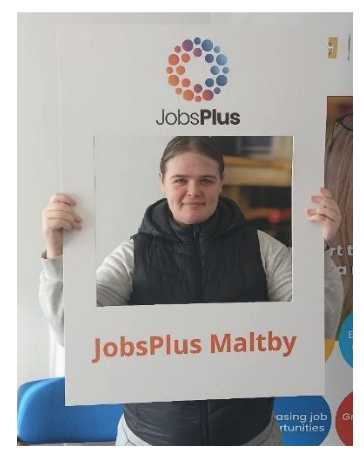
We’re delivering JobsPlus in Maltby, a small town in Rotherham, with support from Communities that Work. The community-led employment scheme aims to help people into work through on-site employment services, community support, and financial incentives. Since launching in July 2024, our JobsPlus team have supported 160 people with 48 successfully finding employment and 45 people moving into education or training.
Shannon, 22, was looking for support to take her next steps into meaningful employment and signed up to the JobsPlus support. After leaving college, she had found it difficult to stay motivated and was feeling low about her prospects. Shannon received regular and consistent guidance and encouragement from her Employment Specialist, Mollie, and she began to feel much more positive about her future.
Through her own determination, Shannon enrolled on a local Level 3 Early Years programme, completed her training, excelled in her work placement, performed brilliantly at interview and successfully secured an Early Years Practitioner job role, which she will be starting very soon.
Shannon said:
“My brother recommended JobsPlus to me. They helped him, and he’s still in work and loving it. I wouldn’t have known about the Early Years training without them. The support with job interviews has been great!”
|
|
Creativity has become a pathway to connection:
JobsPlus in Maltby recently hosted a visit from the Mayor of Rotherham, Councillor Rukhsana Ismail to celebrate the art exhibition that our customers in Maltby have been working on together over the last five months.
The art sessions have provided a valuable space for customers to connect with one another and with their employment specialists, while engaging in creative activities that support their overall wellbeing.
Helen Phoenix, Head of Work and Wellbeing and Board Director at Communities that Work said:
“It’s incredibly powerful to see the real impact JobsPlus is making - being truly embedded in local communities is opening up meaningful pathways into employment for our customers.”
Just a selection of the beautiful art, here!
|
|
Many thanks, SYHA and the team, for bringing this invaluable work to life here in the Spotlight.
|
|
New toolkit launched to strengthen community engagement through heritage A new toolkit has been launched to help housing providers and local organisations build stronger, more connected communities by harnessing the power of heritage and “pride in place”. Developed through Southampton University’s Mansbridge Heritage Project in collaboration with Abri Housing Association, the resource captures practical insights from a major community engagement programme in Southampton marking the area’s centenary. The toolkit sets out a range of place-based approaches designed to better understand how residents feel about where they live, and how this can inform regeneration, service delivery and community investment. It highlights how activities such as heritage walks, memory mapping and creative workshops can strengthen trust, amplify tenant voice and foster social cohesion. The guidance also shows how embedding local stories and lived experiences into engagement can improve wellbeing, reduce isolation and support more inclusive neighbourhoods. Course correction: How to densify British cities
Centre for Cities (April 2026) This report has found that British cities have a ‘density gap’ of 2.3 million homes across their urban cores compared to their French and Japanese peers. The density gap is largest in the big cities outside London and is a likely cause of their economic underperformance. To achieve its goals on densification, the Government needs to continue work on planning reform to move towards a more spatial, rules-based planning system, and continue support for regeneration, including of existing residential areas. AI in Local Government: Adoption, Benefits and Challenges
LPIP Hub (April 2026) This report provides a timely stocktake of how artificial intelligence is being adopted in local government, what benefits are emerging, and what barriers still limit its wider deployment. It draws on analysis of 101 published AI case studies and engagement with a wide range of stakeholders, from local and central government, government agencies, academia, and private sector experts. |
|
Thousands to be supported into work as government reforms welfare system - GOV.UK , 6 April The government has introduced welfare reforms aimed at helping more people move into employment. The changes are designed to remove disincentives within the benefits system that previously made it harder for some individuals to take steps towards work. As part of this, hundreds of thousands of people will be offered voluntary employment support. A central reform is the adjustment of Universal Credit payments. For new claimants receiving health-related support, the payment rate will be reduced compared to previous levels, narrowing the gap between those on health benefits and those actively seeking work. However, people with the most severe conditions and existing claimants will continue to receive the higher rate, ensuring protection for the most vulnerable. McDonald’s is supporting the government's drive to get young people earning or learning - GOV.UK , 23 April The government has announced that McDonald’s will support its “Youth Guarantee” initiative, which aims to reduce youth unemployment by ensuring young people are either earning or learning. As part of this partnership, McDonald’s is launching a large-scale work experience programme, becoming one of several major employers backing the scheme alongside organisations like the Premier League and Channel 4. From August 2026, McDonald’s will offer 2,500 paid work experience placements across the UK, with a quarter reserved for young people most at risk of falling out of education or work. The placements will provide hands-on experience across different roles, from restaurant jobs to corporate positions, and include a guaranteed interview at the end to support progression into employment. Right to Buy overhaul to safeguard social housing - GOV.UK , 28 April The government has announced a major overhaul of the Right to Buy scheme aimed at protecting England’s shrinking social housing stock while still allowing long-term tenants a route into homeownership. The reforms follow a consultation and are part of a broader effort to address housing shortages and rising demand for affordable homes. Central to the changes is a shift in policy focus which changes from maximising sales to ensuring councils can retain and replace housing. Key measures include tightening eligibility and reducing discounts. Tenants will now need to live in their property for up to 10 years before qualifying, compared to three previously, and discounts will start at around 5% and rise gradually to a much lower cap of around 15%. In addition, newly built social homes will be exempt from the scheme for 35 years, preventing them from being sold off too quickly. |
|
Youth Employment Week - Youth Employment UK
Youth Employment UK, 6 – 11th July
This annual celebration will feature #YouthFriendlyMP Day and the Good Youth Employment Awards. The week will celebrate and promote youth employment in all its forms, with events across the UK for young people to take part in. In conversation with Tom Riordan on the northern growth strategy
Centre for Cities, 12th May Join Centre for Cities and Northern Growth Envoy Tom Riordan for this in-depth discussion on the Government’s Northern Growth Strategy. Working across HMT, MHCLG, DfT, mayoral and local authorities, Tom is responsible for coordinating and developing the Government’s plans for growth across the North of England including the Northern Growth Strategy, Northern Powerhouse Rail and the Northern Growth Corridor. Discussion will focus on the role of urban areas, particularly Mayoral Strategic Authorities, in delivering growth in the north of England and will include the chance to ask questions. |
|
|
|