|
Keeping you informed about community-led research - for a more inclusive and equitable Aotearoa.
|
|
|
|
|
|
Nau mai haere mai
Whakatairangatia i te mana o te rangahau ā-hāpori me te mahi tahi
Upholding the mana of community knowledge - together |
|
|
|
Kia ora koutou,
Like many of you, I have been reflecting on the preliminary election results over the weekend. With the results close and special votes still to be counted, we are likely to be living with some uncertainty over the next few weeks.
Personally, I am disappointed to see parties on the right gain more seats in Parliament but moments like this also remind me why our mahi at Community Research matters.
Whatever the final shape of the next government, our role remains important: making community-led research, evidence and different ways of knowing more visible and accessible, challenging inequity, and helping ensure communities can contribute their knowledge and experience to the decisions that affect them.
There has been plenty happening in this mahi over the past month.
Last month we launched our Navigating the Online Landscape Special Collection with a webinar exploring online harms, digital wellbeing and the experiences of our communities. These are increasingly important conversations about how our online environments shape participation, connection and wellbeing.
Our Te Auaha Pito Mata Awards webinar series is also continuing, providing an opportunity to hear directly from award recipients and explore their research and kaupapa in more depth. You can find details of the upcoming webinars below.
We are also delighted to have launched the inaugural edition of Te Whare Kura, a new publication bringing together recent research from across our community.
The weeks ahead may bring change and uncertainty, but they also reinforce the importance of community knowledge and experience in shaping a fairer Aotearoa. For us, that means staying focused on our kaupapa and continuing to create space for community-led research and ways of knowing to be shared, valued and used.
Ngā mihi nui,
Lorna |
|
|
|
We were pleased to attend the 16 October 2026 VNZ conference held in Rotorua this year represented by Eve and Bev. Thanks to VNZ for continuing our ongoing partnership where we captured recordings of the key sessions throughout the event so that they can be shared with the wider community to access and benefit from the insights provided. We are currently in post-production phase for these recordings. |
|
|
|
Tuesday 10 November 12-1pm
Register here
In this webinar/workshop, we hear from Atelaite Mapa, winner of the Billie Award for Strengths-Based Research for LALAGA ŌTARA LEADERS Knowledge Exchange; work that reimagines community research as something gifted by community and grounded in Indigenous relationality, creative practice, and collective storytelling.
Joining Atelaite in conversation are Torisse Laulu, founder of LALAGA, and Matai'a Fritz Evile. Together they will explore leadership, culture, belonging, and the ways communities create positive change for Pacific peoples.
Rather than a traditional presentation, this session will be highly participatory. Attendees will be invited into talanoa spaces to contribute their own experiences, reflections, and insights before returning to a facilitated conversation and storytelling session with the speakers.
This promises to be an engaging and thought-provoking discussion grounded in connection, collective wisdom, and action for change.
Please note that the recording will not include the breakout talanoa sessions.
Facilitated by Violet Tu'uga Stevenson |
|
Monday 23 November 12-1pm
Register here
In this webinar, we meet Ria Te Uira Holmes, winner of the Tangata Whenua Researcher Award, and learn about her thesis ‘Te Tiriti o Waitangi, Tikanga Māori and Labour Frameworks: An Exploration of Collective Agreement Clauses and the Experiences of Māori Workers.’
Ria's research is embedded in kaupapa Māori foundations and shares whānau stories and lived experience, exploring tikanga as law. Through careful, principled relationships, strong relational ethics, and a clear commitment to Māori data sovereignty, the research names one of the most persistent inequities in Aotearoa’s public sector: the unrecognised and unpaid cultural labour of Māori workers, and the absence of enforceable Te Tiriti obligations in employment relations.
Importantly, this is strengths-based research. It affirms tikanga as first law, recognises Māori expertise, and offers a pathway for change that has the potential to improve the conditions under which Māori work, contribute, and lead across Aotearoa.
Facilitated by Joanne Waitoa, this kōrero will explore they key findings of the research, Ria’s experience as an indigenous researcher and what Te Tiriti and Tikanga can mean for the future of employment law and its impact on Māori workers. |
|
Video now available!
The recording of our well attended 19 October webinar: Navigating the online landscape in Aotearoa is now available to watch here. Drawing on local evidence, lived experience, and community knowledge, and framed by Te Tiriti o Waitangi, equity, and intersectionality, our speakers explored how online harms can directly and indirectly diminish participation, wellbeing, visibility, and self-determination. Our highly-respected panel speakers were Anjum Rahman, Karaitiana Taiuru, Suze Wilson, and Tracey Nicholls.
This webinar was part of celebrating the launch of the new Community Research Special Collection - Navigating the online landscape. |
|
In this webinar, we met Joseph Tutonga Houghton, winner of the Pasifika Researcher Award, and explore his study Amplifying Pacific Voices in a Christchurch Secondary School: A Study Guided by Tīvaevae & Talanoa.
His research examines how Pacific students, families, and teachers experience school environments, and how schools can better recognise Pacific values, strengthen relationships, and foster a genuine sense of belonging.
Guided by the Cook Islands-inspired tīvaevae research model and the Pacific practice of talanoa, the study brings together the voices of students, parents, community leaders, and teachers to better understand educational aspirations and identify opportunities for growth. |
|
November Ethnic, former Refugee and Migrant tautoko sessionTuesday 24 November 12 - 1.00pm. More details and register here. Presenter: Rachel Simon-Kumar, University of Auckland We invite you to the last Tautoko session for 2026. In this session, Rachel will offer some preliminary findings from a Health Research Council-funded study on ‘Ethnic Data and Sovereignty’ which aims to map data considerations relating to New Zealand’s Ethnic communities. Drawing on interviews and focus groups conducted with academics and researchers, public servants, NGOs, and community, she will outline some of the issues and concerns around minority and migrant populations as well as some principles of data sovereignty relevant to these communities.
This will be followed by time for Q&A and discussion. |
|
Good With/In Games Spotlight
DE&I Doesn't Work - Let me tell you why
In this talk, Dr Alayna Cole sets out the provocative title, 'DE&I Doesn't Work Let me tell you why'. The talk dives into the different ways diversity, equity and inclusion programmes have traditionally been set up; what goals they've been set up to achieve; and how they've achieved them. She points out that while many programmes are at surface level set up for improving organisation culture, underneath the surface the unspoken goal is often optics - appeasing shareholders and customers that the company is 'doing things correctly', and how that's often the limits of what they achieve. Dr Cole shapes how this process of having undefined intentions behind a project can affect outcomes. She then covers some of the evidence-based effective tools for increasing companies' diversity, equity and inclusion, such as leadership training, conversation, and storytelling-based team development.
Watch the talk here. |
|
|
|
This resource lists 70 unique Māori AI and Data Governance frameworks that are provided so that organisations, researchers and agencies can find the one that best fits their purpose. Each one gives effect to the inherent rights Māori hold over Māori data.
There are many ways to recognise Māori Data Sovereignty, and there is no single framework. This range is a strength, not a weakness and reflects that there is no one AI or Data governance framework suitable for every organisation. However, this does reinforce that any organisation cannot claim that Māori Data Sovereignty is too hard to put into practice, or that it has to wait for one approved national standard.
Practical, tested tools already exist for almost every sector and type of data. What matters is choosing a framework that fits the data, the people it comes from and the purpose. That choice should be made with the Māori communities who hold kaitiakitanga over that data.
|
|
|
|
The Papatūānuku Paradigm - Training videos with Dr Kathie Irwin
The Papatūānuku Paradigm is a gender analysis tool grounded in a Te Ao Māori Worldview. These videos offer an opportunity to spend time with Dr Kathie Irwin as she explores The Papatūānuku Paradigm - sharing the thinking, knowledge and whakaaro that sit behind it and bringing the Paradigm to life through her own kōrero.
The videos have been developed as a teaching resource for organisations and groups. Along with the training manual, which is coming soon, they support professional learning informed by Māori pedagogy and can be used to create your own in-house wānanga or workshops. They provide space to learn together, reflect and consider how the Paradigm can inform the mahi we all do.
The Papatūānuku Paradigm can be applied across all the systems that shape women’s lives, and we invite you to explore the Paradigm and consider how it might inform your own mahi and contribute to the collective work of ending women’s homelessness in Aotearoa.
Join us in the movement to end womens homelessness.
|
|
|
|
Seeding Hope | He Kākano AhauSeeding Hope | He Kākano Ahau is an Aotearoa-produced podcast that weaves together Indigenous knowledge with practical insights from a diverse group of Māori women, including food growers, environmental activists, deep thinkers, poets and healers.
Hosted by Dr Jessica Hutchings, co-founder of Papawhakaritorito Trust, and in collaboration with Ma Earth, the conversations reveal how Mana Wāhine Indigenous women are uniquely positioned to navigate the polycrisis we are in, and why sharing, saving, storing and sowing seeds are vital practices that connect us back to the rhythms of Papatūānuku Mother Earth.
|
|
|
|
The Charlotte Museum is a museum, gallery, research library and document archive collecting, preserving and exhibiting Lesbian Sapphic herstory and cultural experience and the cultural heritage of Rainbow+ Communities in Aotearoa New Zealand. Their annual fundraising event is this Friday.
Friday the 13th of November 2026
7:00PM – 12:00AM
Grand Millenium Hotel
'Join us for a Friday the 13th themed Sapphic Soirée, an unforgettable night of dancing, drinks, laughter, and community connection.
Celebrate, unite, and help us make history while supporting the Charlotte Museum. This is more than a party; it’s a night to be ourselves with our Sapphic whānau.
Come in your fanciest dress and/or your best Friday the 13th themed costume.
This event is designed to celebrate our FLINTA whānau and will be a safe space for anyone who feels this is where they should be!'
Purchase a ticket here
|
|
|
|
| |
This Webinar will be hosted by Dr. John Godfrey with guest speakers Prof. Stephen Knowles, Professor of Economics at the University of Otago who researches charitable giving and Adjunct Assoc. Prof. Wendy Scaife, long-time philanthropy and fundraising researcher and practitioner from the Australian Centre for Philanthropy and Nonprofit Studies at QUT.
When: Nov 20, 2026 12:00 PM Canberra, Melbourne, Sydney | 2:00 PM New Zealand (NZDT)
Topic: ANZTSR Charitable Giving in Australia and New Zealand
Register in advance for this webinar:
https://uni-sydney.zoom.us/webinar/register/WN_5hGg53C3S-y3tbtE3Rbzeg
Meeting ID: 847 4842 4048 |
|
|
|
| | Asia Pacific Summit of Refugees 2026 - New Zealand Local Hub
25–27 November 2026 | Wellington, New Zealand
The Asia Pacific Network of Refugees (APNOR), in collaboration with Voice of Aroha and the New Zealand National Refugee Youth Council, invites refugee leaders, refugee-led organisations, community representatives and key stakeholders to register their interest in participating in the Asia Pacific Summit of Refugees 2026 (APSOR 2026) – New Zealand Local Hub.
APSOR is a refugee-led regional platform bringing together communities and stakeholders across the Asia Pacific to strengthen refugee leadership, influence policy and practice, and create practical opportunities for collaboration.
In 2026, the main Summit will take place in Jakarta, Indonesia, alongside Local Hubs across the Asia Pacific. The New Zealand Local Hub will take place in Wellington from 25–27 November 2026, connecting participants with the regional Summit through discussions, consultations and online engagement.
Express your interest in joining the New Zealand Local Hub either in-person or online (if available). |
|
|
|
Conference: Queer Contexts 2026
Queer Contexts 2026 is the second biennial conference of the Australasian Queer Research Network (AQuRN), formerly the LGBTIQA+ Research Network. The event aims to bring together researchers across Australia, Aotearoa New Zealand and the region working within queer contexts. The conference aims to share leading queer research, creative practice and activism being undertaken within and beyond our region today across a range of disciplines to facilitate cross-disciplinary dialogue.
Dates: Mon, 7 Dec, 9:30am - Tue, 8 Dec, 4pm
Location: University of Auckland, (General Library, 5 Alfred St, Auckland)
Tickets available here. |
|
|
|
Hapori Aotearoa 2027Hapori Aotearoa is heading to Ōtautahi Christchurch on 10–11 March 2027, and registrations are now open. Hapori Aotearoa is a national gathering for people passionate about community-led development. It’s an opportunity to share our work, celebrate our successes, and put community at the heart of everything we do.Whether you’re working at a grassroots level, within local or central government, in the community and voluntary sector, philanthropy, research, social services or somewhere in between, Hapori Aotearoa is a chance to connect, share and learn alongside others working to strengthen communities. And you don’t need to work for a community organisation to take part. If this kaupapa speaks to you, you’re welcome. You can find out more and register here. The full programme is scheduled to be released in late November. |
|
|
|
| |
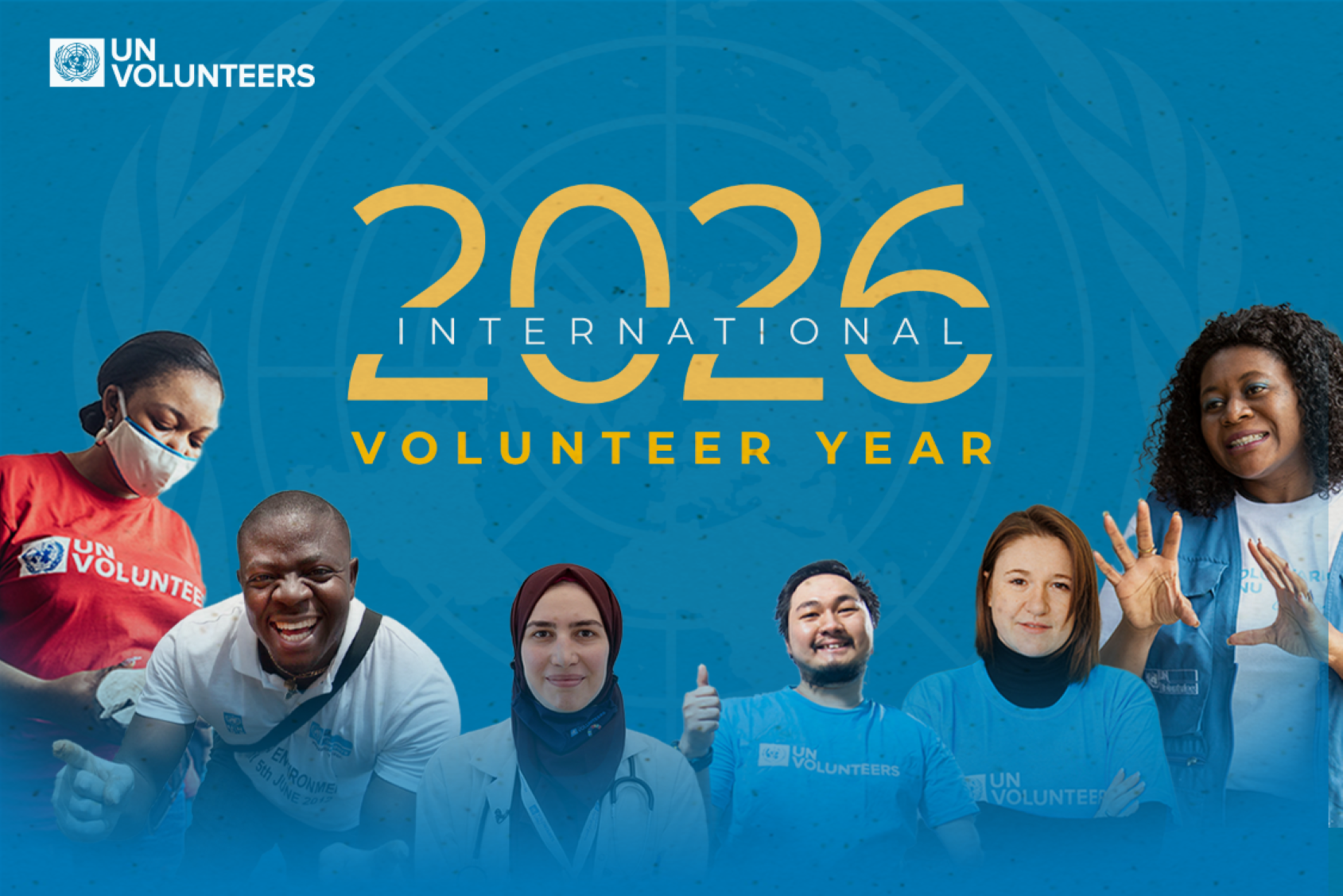
2026 is International Volunteer Year (IVY26) – as declared by the UN General Assembly. Many community organisations are backing the year as an opportunity to promote and support volunteering.
IVY 2026 is an opportunity to emphasise the power of volunteering, encourage greater investment in volunteering, and secure commitments from governments and others to support volunteering.
Volunteering New Zealand has been asking people in the community sector what would improve the future of volunteering towards an IVY26 Call to Action.
|
|
|
|
Our vision is a more equitable, engaged and inclusive Aotearoa informed by community knowledge.
Ko ta mātou whakakitenga he Aotearoa e tōkeke ana, e whai kiko ana, e whakamohio mai ana e te matauranga hapori.
Our Commitment:
We provide our services free of charge to support tangata whenua, and the voluntary and community sectors. Community Research is a registered charity, sustained by donations and grants.
Your Support Matters:
If you value our work, please consider making a donation. Your contribution helps us continue to foster a more connected and informed Aotearoa. |
|
|
|
|
|