|
Keeping you informed about community-led research - for a more inclusive and equitable Aotearoa.
|
|
|
|
|
|
Nau mai haere mai
Whakatairangatia i te mana o te rangahau ā-hāpori me te mahi tahi
Upholding the mana of community knowledge - together |
|
|
|
Mānawatia o Matariki! Ngā mihi o te tau hou Māori.
As we celebrate Matariki, we take time to reflect on where we have come from, celebrate the present, and look ahead with hope and intention. It is a season that reminds us of the importance of renewal, connection, and setting our sights on the future.
For me, this year's Matariki feels especially significant. After spending the past month overseas, I have returned home with a renewed appreciation for Aotearoa and the unique strengths of our communities. While there is much happening across the world, and within Aotearoa, that can create uncertainty, I return full of hope for our future and inspired by the people and organisations working every day to create a more equitable, inclusive, and connected Aotearoa. As we begin this new year in the Māori calendar, let's carry that hope forward—continuing to listen, learn, and invest in community knowledge that helps shape a future where everyone belongs and thrives.
Our team are excited to be planning a series of webinars that will give you the opportunity to hear directly from this year's Te Auaha Pito Mata Awards award recipients as they share their research, insights, and aspirations for change. We look forward to sharing more details with you soon.
In this edition of Ngā kete, you'll find research, resources, and stories that continue to demonstrate the power of community knowledge to inform, inspire, and strengthen our communities.
Nā Lorna. |
|
Photo of our Matariki spread. Not pictured was a big pot of delicious kumara soup! |
|
|
|
| | A just transition for Taranaki: views from workers and employers
Sam Huggard | E Tū Union
There is little New Zealand research on workers’ own expectations of a just transition, and this report attempts to begin to provide this worker voice for policy makers.
This research, carried out with the support of the Industrial Relations Foundation, presents insights into the experience of New Zealand workers in transition in the Taranaki region, in particular the interventions they and their employers would see as useful to support them to successfully move into new (or modified) work.
The research was carried out through a phone survey of 100 workers in the Taranaki region, two focus groups of workers in the region, and five structured interviews with key employers locally.
Read the research here. |
|
|
|
| | Mātai ako: Te Tiriti o Waitangi in learning and teaching
Christina Severinsen, Bevan Erueti, Farzanah Desai, Rangimarie Mahuika, Peter Graham and Reupena Tawhai
This article examines initiatives within the College of Health at Massey University to embed Te Tiriti o Waitangi in learning and teaching. Situated within broader strategies, it focuses on the Mātai Ako initiative, which supports staff in building an understanding of Te Tiriti, developing competence, and aligning curricula.
Drawing on national policy and university commitments, the initiative advances four actions: developing foundational knowledge, offering skill-building workshops, providing pedagogical mentoring, and reviewing curricula. Early outcomes include increased understanding, pedagogical shifts, and identification of next steps, though sustaining systemic change remains a challenge.
The initiative is guided by an ethic of open communication, collective growth, and a staged approach that centres mātauranga Māori while respecting diverse starting points. It offers lessons for higher education institutions navigating tensions between Western academic traditions and obligations to Indigenous rights. Despite ongoing challenges, strategic alignment has established a platform for meaningful change.
Read the research here. |
|
|
|
We are pleased to invite you to join us for a jointly hosted webinar with Aotearoa Migration Research Network at 12 noon Friday 24 July.
Register here.
How do migration, culture, identity, family expectations and wider system barriers shape the mental health and addiction experiences of Asian communities in Aotearoa New Zealand? More importantly, what does culturally responsive care look like in everyday practice?
This webinar introduces Asian Family Services’ Integrated Tree Model©, a culturally grounded framework developed to support Asian mental health, addiction and wellbeing practice. Using the metaphor of a transplanted tree, the model helps practitioners understand how a person’s roots, trunk, branches and surrounding environment interact to influence wellbeing, distress, coping and recovery.
Rather than presenting the Integrated Tree Model© only as a theory, AFS will share how it is being applied through its dedicated Asian mental health and addiction services, highlighting practical lessons for culturally responsive frontline care. |
|
|
|
This in-progress special collection is now available on our site. Community Research has been working with folks cross our communities to build a locally grounded collection celebrating the unique voices of our LGBTTQIA+ communities in Aotearoa.
If you have a resource or piece of research that you’d like communities to be able to freely discover and access, we’d love to connect. Check out the growing collection here. The page also features a mailing list for this mahi, and links to partners and other orgs in Aotearoa. |
|
Updating Housing for all and Volunteering & Mahi Aroha Special Collections
It was with pleasure and appreciation, we met with two Global Studies (University of Victoria) third year student project teams this week to discuss their volunteer support to help us update two of our special collections: Housing for all, and Volunteering & Mahi Aroha. We're looking forward to working with the teams through to October and gaining insights from their mahi and the research, perspectives and knowledge they identify. These projects help us to ensure these collections are living resources that reflect contemporary thinking and community concerns.
Thank you to Sally Hill, Director - Global Studies, for this opportunity to partner in this way. |
|
 |
New Community Research Online Harm special collection collaboration
Community Research have begun working with Tāhono Trust, Amnesty International, and the Online Safety Coalition to develop a special collection that focuses on understanding, preventing, and addressing online harm in Aotearoa New Zealand (the Collection).
This mahi connects with the Coalition for Better Digital Policy formed by Tāhono Trust whose vision is to: see the robust, inclusive, and effective use and regulation of online platforms in Aotearoa, with a focus on upholding human rights and preserving the benefits technology can provide us.
A collective effort is required for this initiative to be successful. We will be reaching out via Ngā Kete in the coming months to engage more broadly with interested researchers and allies for feedback, support, and contributions for setting up the collection. In the meanwhile, please feel free to contact us at content@communityresearch.org.nz if you would like to know more.
|
|
|
|
Te Tiriti based Futures 2026 and Tiriti organisational journeys.
All of the 2026 Te Tiriti-Based Futures webinar recordings are now available to be viewed online at the Te Tiriti-based futures + Antiracism YouTube channel. Tiriti Organisational journeys presentations (Honourable Kāwanatanga Project) have also been released online. These presentations formed part of a one day online gathering to explore the transformative potential of a Te Tiriti-led Aotearoa. Te Tiriti o Waitangi organisational journeys requires us to look beyond the constraints of current colonial frameworks and imagine how our society, economy, and environment might flourish when the promises made in 1840 are finally realised. The day was about moving from theory to practice, moving our "eyes wide open" toward "hands ready for action." |
|
|
|
Level 1: The Theory of Change is based on evidence
Level 2: Evidence indicates changes in outcomes or impacts
Level 3: Evidence demonstrates if a programme or service has contributed to, or caused, observed outcomes or impacts.
The guidelines note that across all levels of standards, agencies should seek to:
• engage communities, partners, and stakeholders appropriately
• use evidence approaches that are inclusive and fit for purpose
• recognise the value of Kaupapa Māori and other knowledge systems
• combine quantitative, qualitative, operational, and lived-experience evidence
• use findings to improve services and future investment decisions
• apply the standards proportionately and pragmatically.
Read the standards and accompanying guidelines. |
|
|
|
| | Hui Ē! Together for the Vote - The Big Launch
28 July 7:30pm | Online
Together for The Vote is for anyone wanting to lift enrolment and get out the vote this election. Hear three guest speakers share perspectives on our present turning point from where they stand, and from ActionStation's Kassie Hartendorp (Ngāti Raukawa) and Nadia Abu-Shanab who will share more about Together for The Vote and how you can play a role.
If you’re serious about Te Tiriti, economic and climate justice, you know the need for real change is stronger than ever. Over the last few years, our determination and care has seen us show up in historic numbers, for each other and this place we call home.
Register here. |
|
|
|
| | - tauiwi Pākehā: 16 August to 18 October 2026, fully online
- tauiwi of the Global Majority (BIPOC): 26 July to 26 September 2026
Are you? - tauiwi Pākehā or tauiwi of the Global Majority (BIPOC), committed to Te Tiriti justice, and ready to take action to support this?
- keen to learn proven strategies to have effective anti-racist conversations to address anti-Māori racism and, with support and community, put this learning into practice
- up for delving into the dreaded comments section to put this into practice
- able to contribute at least 4 hours’ work per week to the training
- looking for a community of non-Māori committed to taking action for Te Tiriti justice, to connect and contribute to following the training
Contact info@tauiwitautoko.com for more info and a link to upcoming course expression of interest. |
|
|
|
| |
- Open to individuals, organisations and communities focused on Internet-related research relevant to New Zealand.
- The area of research can be anything Internet-related: for example, technically focused topics such as cybersecurity or Internet resilience; or social and health focused topics such as digital access or social media harm.
- The proposed research should be able to demonstrate it has been driven by a community of Internet users, and will create or influence positive outcomes for that community online.
- We’re offering one-off grants of around $20,000–$30,000 to each project or initiative (guide only). The total funding available for this round is $250,000.
- The closing date for the first application is 20 August 2026.
Find out more here. |
|
|
|
| |
Sat, 25 Jul, 10am - 3pm NZST
Ethnic Rainbow Alliance presents Non-Summit Summit 2026.
A gathering for queer thinkers, creatives, organisers, students, artists, community members, and curious minds interested in exploring the futures we are shaping together.
This year’s theme is: Nurturing Queer Futures & Imaginaries
Non-Summit Summit is not a traditional conference. It is a softer, more open space designed for dialogue, curiosity, and shared thinking.
Across the day, participants will gather through facilitated discussions, shared whakaaro, and conversations grounded in lived experience, creativity, culture, and community.
This is a space to reflect on where we are, where we’ve come from, and what kinds of futures we want to build together.
All are welcome.
You do not need specialist knowledge or academic language to take part, just openness, curiosity, and a willingness to imagine together.
This gathering invites us to reflect, reconnect, and think collectively about the futures still waiting to be imagined.
Register here.
|
|
|
|
| | Connecting for change conference28 - 29 July Te Whanganui a Tara | Wellington A two-day conference bringing together community organisations, social sector leaders, and government representatives to share solutions and shape an equitable Aotearoa New Zealand. Increasing need in our communities has put the community sector under immense pressure. Connecting for Change is a timely opportunity to work together to make real progress. The conference will connect members and organisations working in the social sector — sharing solutions, experiences, and innovations. It provides a collaborative space where those doing the mahi on the frontlines and those working on big-picture policies can kōrero together. The programme will bring real stories and solutions to those able to implement change, and to find the common ground we all tread together. Register for the conference here. |
|
|
|
| |
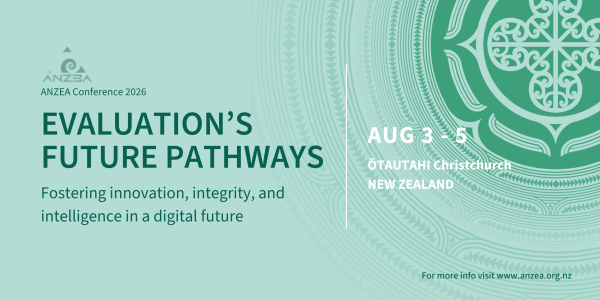
Evaluation's future pathways: fostering innovation, integrity, and intelligence in a digital future.
3 - 5 August
Ōtautahi | Christchurch
This year's theme invites us to imagine the future of evaluation by strengthening what only humans can do – our judgement, ethics, relationships, creativity, and storytelling – alongside new tools and technologies.
We’ll be exploring three intertwined “I”s:
Innovation – experimenting with new approaches, roles, and tools (including AI) in ways that respond to real‑world complexity and community priorities, not just trends.
Integrity – holding fast to evaluation ethics, mana‑enhancing practice, Te Tiriti commitments, and cultural responsiveness as the ground we stand on.
Intelligence – valuing human insight, wisdom, and sense‑making: reading context, navigating power, building trust, and weaving findings into stories that move people to action.
At the heart of ANZEA 2026 is a simple idea: evaluation’s future will be shaped less by the tools we use, and more by the kind of humans we choose to be as evaluators.
Find more information here. |
|
|
|
| |
8-9 September 2026
Early bird registrations open now!
This conference centres ethnic minority voices, lived experiences, cultural knowledge, and evidence-informed approaches to re-envision equitable health futures. We welcome contributions from all disciplines—including public health, social sciences, medicine, policy, community development, anthropology, and Indigenous studies. The 2-day conference is open to academics and researchers, policymakers and service managers, clinicians, community practitioners, and students who work in or are interested in Asian and Ethnic Minority (A/EM) health. It provides an opportunity to hear from experts, develop collaborations, and build networks.
Register for the conference here. |
|
|
|
| |
16-20 November, 2026
Waipapa Taumata Rau, Tāmaki Makaurau.
CALL FOR ABSTRACTS - extended to 17 July!
Abstract submissions are now invited for the 12th International Indigenous Research Conference (IIRC 2026), an Indigenous‑led, in‑person conference bringing together Indigenous researchers, communities, and allies from around the world.
Conference Theme: Kei tua o te pae | Beyond the Horizon
We invite Indigenous‑led research that moves beyond insight into action, research that supports wellbeing, self‑determination, and flourishing Indigenous futures. Submissions must be Indigenous‑led and presented, with the lead presenter clearly identifying their Indigenous or traditional affiliations.
|
|
|
|
| |
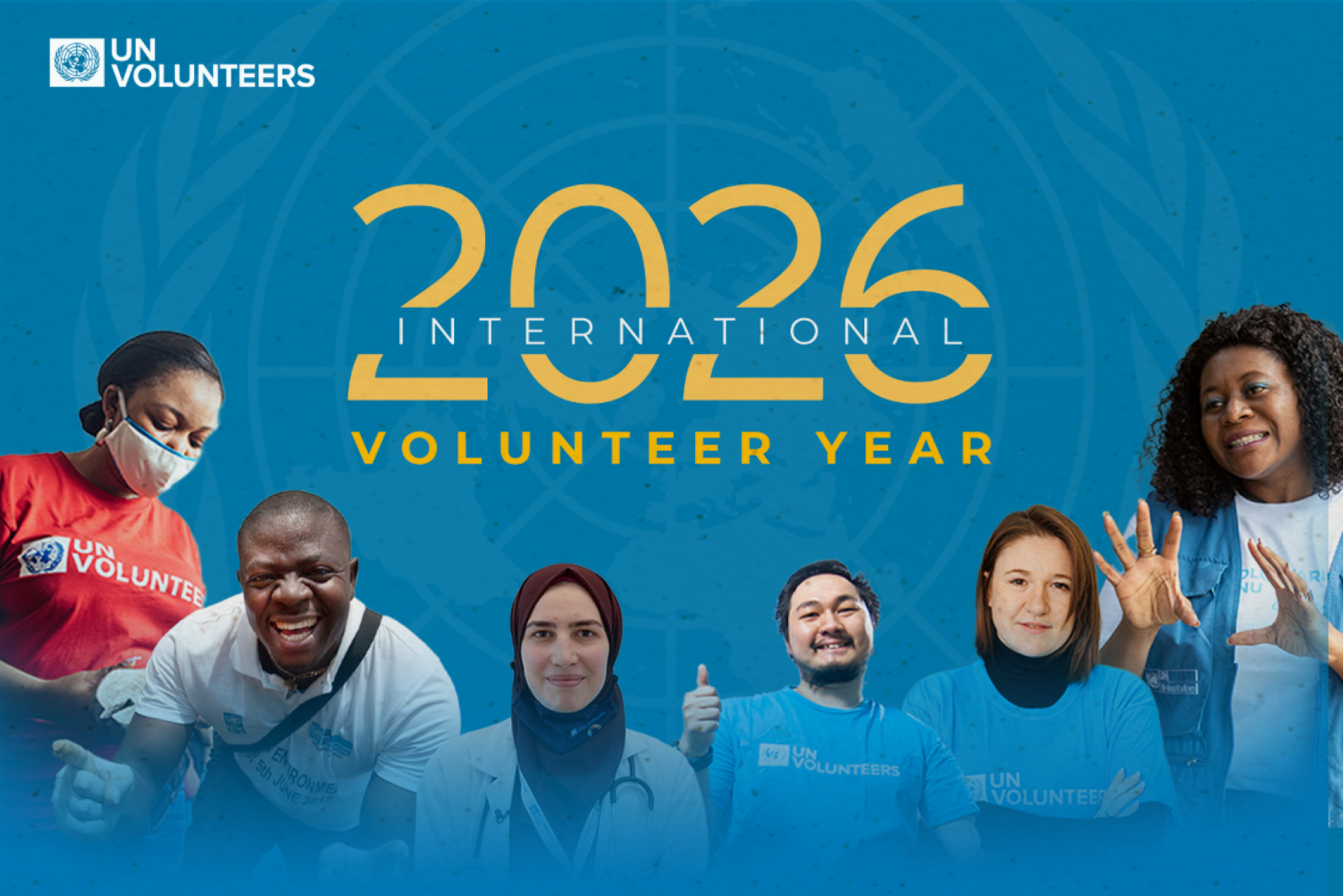
2026 is International Volunteer Year (IVY26) – as declared by the UN General Assembly. Many community organisations are backing the year as an opportunity to promote and support volunteering.
IVY 2026 is an opportunity to emphasise the power of volunteering, encourage greater investment in volunteering, and secure commitments from governments and others to support volunteering.
Volunteering New Zealand has been asking people in the community sector what would improve the future of volunteering towards an IVY26 Call to Action.
|
|
|
|
Our vision is a more equitable, engaged and inclusive Aotearoa informed by community knowledge.
Ko ta mātou whakakitenga he Aotearoa e tōkeke ana, e whai kiko ana, e whakamohio mai ana e te matauranga hapori.
Our Commitment:
We provide our services free of charge to support tangata whenua, and the voluntary and community sectors. Community Research is a registered charity, sustained by donations and grants.
Your Support Matters:
If you value our work, please consider making a donation. Your contribution helps us continue to foster a more connected and informed Aotearoa. |
|
|
|
|
|